


Content
- 1 What a Wheel Bearing Is and What It Does
- 2 What a Wheel Hub Is and What It Does
- 3 How Wheel Bearings and Wheel Hubs Are Physically Related
- 4 Comparing Failure Symptoms: Bearing vs. Hub Problems
- 5 Generation Types of Hub Bearing Units: What the Industry Means by Gen 1, Gen 2, and Gen 3
- 6 When to Replace Just the Bearing vs. the Entire Hub Assembly
- 7 Critical Installation Details That Affect Bearing and Hub Longevity
Wheel bearings and wheel hubs are two of the most fundamental components in any vehicle's suspension and drivetrain system, yet they are routinely confused with each other — even by experienced mechanics and parts buyers. The confusion is understandable: the two components are physically connected, often sold together as a hub bearing assembly, and share the common function of allowing the wheel to rotate. However, their individual roles, failure modes, replacement procedures, and costs are distinct enough that understanding the difference is essential before diagnosing a noise, ordering parts, or authorizing repair work.
What a Wheel Bearing Is and What It Does
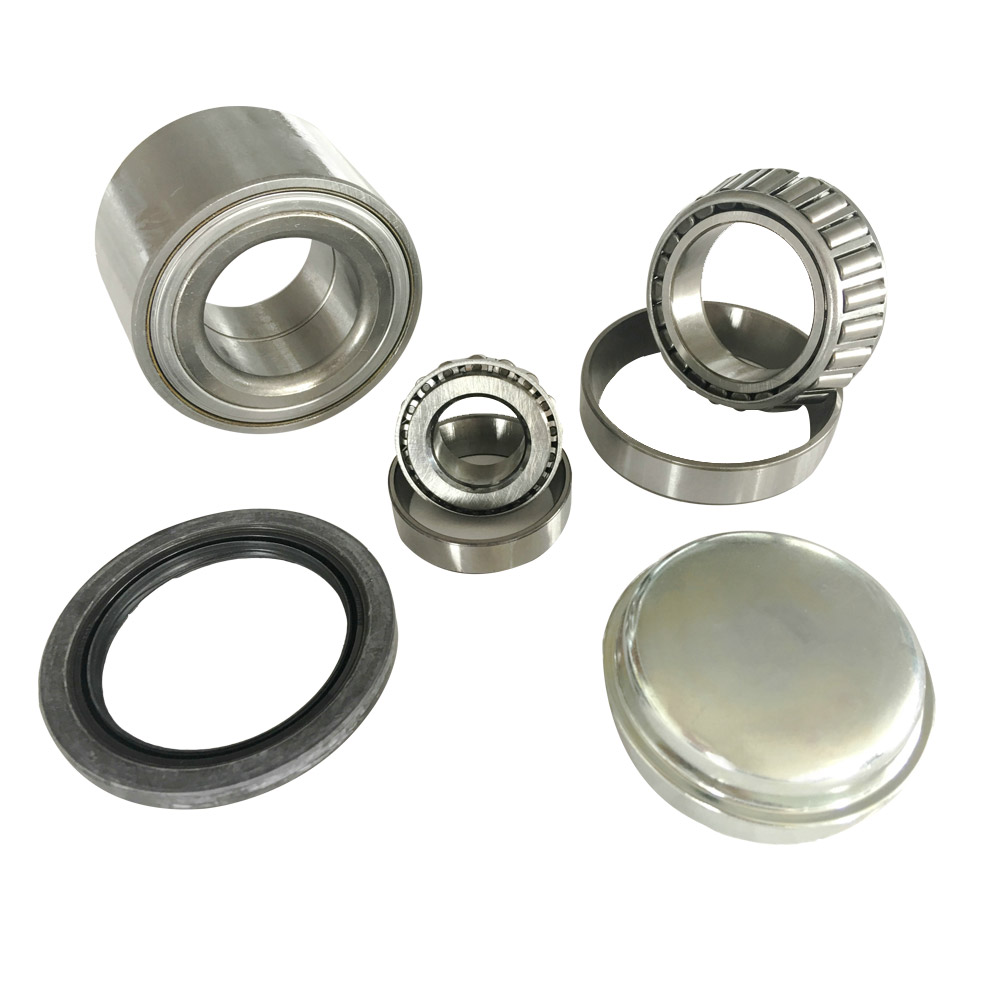
A wheel bearing is a precision mechanical component whose sole purpose is to reduce rotational friction between two surfaces — specifically between the stationary spindle or axle shaft and the rotating wheel assembly. It achieves this through a set of hardened steel balls or tapered rollers held in a precise circular arrangement within an inner and outer race. The rolling elements separate the two races, allowing one to rotate smoothly relative to the other while carrying the vehicle's load.
Modern passenger vehicles use one of two primary bearing designs. Ball bearings use spherical rolling elements and handle a combination of radial loads (the weight of the vehicle pressing down) and axial loads (lateral forces during cornering). Tapered roller bearings use conical rollers arranged at an angle, providing greater capacity for combined radial and axial loading, which is why they are common in truck axles and heavy-duty applications. In both designs, the bearing races and rolling elements are manufactured to extremely tight tolerances — typically within microns — because even minor irregularities translate directly into friction, heat, noise, and accelerated wear.
The bearing is sealed with rubber or metal shields that retain lubrication grease and exclude contamination. Once a seal fails and water, road grit, or brake dust enters the bearing, the lubricant film breaks down and metal-to-metal contact begins. This is the most common origin of bearing failure in service vehicles.

What a Wheel Hub Is and What It Does
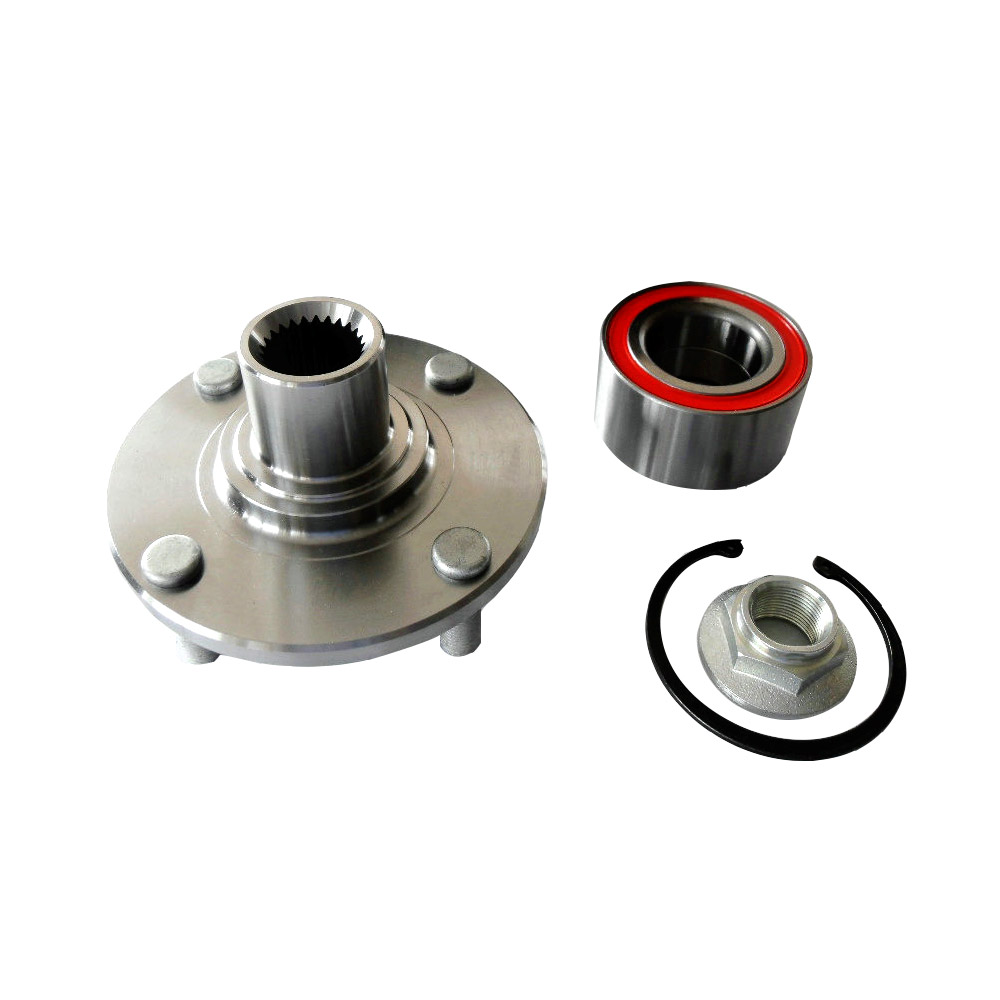
The wheel hub is the structural mounting interface between the wheel and the vehicle's suspension system. It is a machined metal casting — typically made from cast iron, forged steel, or aluminum alloy — that serves multiple critical functions simultaneously. The hub provides the flange face to which the wheel is bolted via lug studs or lug bolts. It houses the wheel bearing within a precisely bored bore diameter. On driven axles, it transmits torque from the axle shaft or CV joint to the wheel. On non-driven axles, it simply provides a secure rotational mount for the wheel.
The hub also serves as the mounting point for the brake rotor or brake drum. On most modern vehicles, the rotor slides over the hub's pilot ring and is held in place by the wheel itself once the lug nuts are torqued. This means the hub's runout — any deviation from perfect flatness or concentricity — directly causes brake rotor runout, which manifests as brake pedal pulsation during stopping. A hub that has been damaged by impact, heat cycling, or corrosion can cause brake complaints even when the rotor itself is perfectly machined.
On vehicles equipped with ABS (Anti-lock Braking System), the hub typically carries the ABS tone ring — a toothed ring or magnetic encoder ring that the wheel speed sensor reads to monitor rotational velocity. This integration of safety-critical sensing into the hub assembly is one reason why hub replacement requires careful attention to ABS sensor compatibility and correct reinstallation.
How Wheel Bearings and Wheel Hubs Are Physically Related
Understanding the physical relationship between the bearing and the hub clarifies why they are often discussed together. In older vehicle designs, the wheel bearing was a separate unit pressed into the steering knuckle, and the hub was an independent component that pressed through the bearing's inner race and was retained by a spindle nut. These serviceable designs allowed a mechanic to replace just the bearing without replacing the hub — a cost-effective approach used on many rear-wheel-drive vehicles and light trucks through the 1990s.
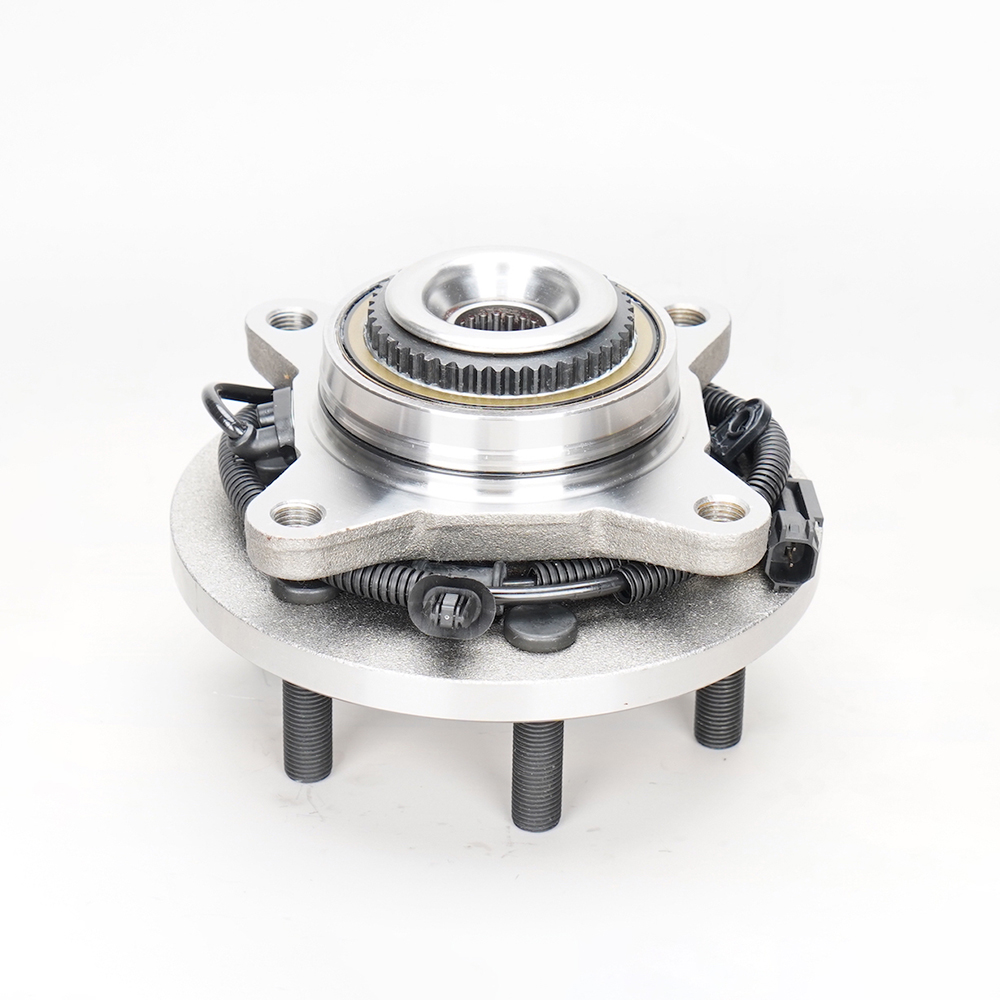
Modern vehicles overwhelmingly use a hub bearing unit (HBU) or wheel hub assembly — an integrated component in which the bearing and hub are pre-assembled, pre-greased, and pre-sealed as a single non-serviceable unit. In this design, the outer bearing race is pressed into or integral with the hub flange, and the entire assembly bolts directly to the steering knuckle. When the bearing fails in this configuration, the entire hub bearing assembly must be replaced; there is no way to press in a new bearing separately without specialized equipment and the risk of damaging the hub bore.
The shift to integrated hub assemblies has significantly reduced bearing replacement time in workshop environments — a straightforward hub assembly replacement can take as little as 30 to 60 minutes per corner — while also improving bearing consistency, as factory pre-loading and sealing eliminate variables introduced during field assembly of separate components.
Comparing Failure Symptoms: Bearing vs. Hub Problems
Because the bearing and hub are so closely linked, their failure symptoms can overlap — but there are distinguishing characteristics that point toward one component or the other:
| Symptom | More Likely: Bearing | More Likely: Hub |
|---|---|---|
| Grinding or humming noise | Changes with vehicle speed; varies when turning | — |
| Brake pedal pulsation | — | Hub runout causing rotor wobble |
| ABS warning light | Bearing with integrated encoder ring | Damaged tone ring on hub |
| Wheel play or looseness | Worn bearing races or rolling elements | Damaged hub bore allowing bearing movement |
| Uneven tire wear | Bearing play causing camber variation | — |
| Vibration through steering wheel | Front bearing wear on steered axle | Hub runout or damaged lug stud flange |
The classic wheel bearing test involves lifting the vehicle, grasping the wheel at the 12 and 6 o'clock positions, and attempting to rock it in and out. Perceptible play — more than 0.1 mm — indicates bearing wear. Then rotate the wheel by hand; grinding, roughness, or intermittent drag indicates damaged bearing races. These tests help isolate bearing problems, but hub damage typically requires inspection after the wheel and bearing assembly are removed from the knuckle.
Generation Types of Hub Bearing Units: What the Industry Means by Gen 1, Gen 2, and Gen 3
The automotive industry classifies wheel hub bearing units into three generations based on their design complexity and integration level, and this classification directly affects how the component is diagnosed, purchased, and replaced.
- Generation 1 (Double-row angular contact ball bearing): A standalone double-row bearing unit pressed into the steering knuckle bore. The hub is a separate component. The bearing can theoretically be replaced independently, but the press-fit procedure requires a hydraulic press and precise alignment tools. Widely used on older European and Asian vehicles from the 1980s through early 2000s. Diagnosis requires measuring bearing play in-situ or disassembly for inspection.
- Generation 2 (Flanged outer ring): The bearing outer ring has a mounting flange that bolts directly to the steering knuckle, eliminating the press-fit requirement. The hub remains separate. This design simplifies field replacement — unbolting the flange allows bearing removal without a press — and is common on rear axles of front-wheel-drive vehicles. The hub still requires removal from the inner bearing race, which may need a puller tool.
- Generation 3 (Integrated hub bearing assembly): The bearing and hub are completely integrated into a single unit with a mounting flange that bolts to the steering knuckle. Lug studs are pressed into the hub flange. The ABS encoder ring is integrated into the bearing seal. This is the dominant design on modern front-wheel-drive and all-wheel-drive vehicles. Replacement requires unbolting the assembly from the knuckle — no press work needed — but the entire unit must be replaced when either the bearing or hub is damaged.
Understanding which generation applies to a specific vehicle determines not just which part number to order, but also which tools are required and whether separate bearing and hub components are even available for that application.
When to Replace Just the Bearing vs. the Entire Hub Assembly
On vehicles where the bearing and hub are separate serviceable components (Generation 1 and 2 designs), the decision of whether to replace only the bearing or also the hub depends on the condition of the hub bore and flange:
- Replace only the bearing when: The hub bore is within specification (check with a bore gauge against the manufacturer's tolerance), the hub flange face is flat within 0.05 mm, all lug studs are undamaged, and there is no visible corrosion pitting or impact damage on the hub body. In this scenario, pressing a new bearing into a serviceable hub is the most cost-effective repair.
- Replace the hub as well when: The hub bore has been enlarged by bearing spinning (a condition where the outer race rotates in the bore rather than remaining stationary), the flange runout exceeds 0.08 mm, lug studs are damaged or corroded, or the hub shows cracks from impact or fatigue. Pressing a new bearing into an oversized or damaged bore will result in premature failure — the bearing will spin in the bore rather than being securely retained.
- For Generation 3 integrated assemblies: The question is moot — the entire hub bearing unit is replaced as a single piece. The practical decision becomes whether to use an OEM (Original Equipment Manufacturer) assembly or a quality aftermarket equivalent. For safety-critical applications and vehicles with integrated ABS encoding, OEM or Tier 1 supplier parts are strongly recommended to ensure correct encoder ring specification and bearing preload.
Critical Installation Details That Affect Bearing and Hub Longevity
Even a high-quality replacement bearing or hub assembly will fail prematurely if installed incorrectly. The following installation details are the most frequently overlooked factors that determine how long a replacement part will last:
- Hub nut or axle nut torque: The central spindle nut or axle nut preloads the bearing. Over-torquing crushes the bearing races and causes immediate overheating and premature failure. Under-torquing allows the inner race to move on the spindle, causing fretting corrosion and eventual loosening. Always use a calibrated torque wrench and follow the vehicle-specific torque specification — typically between 150 Nm and 300 Nm depending on the application — and use a new nut if the old one is a prevailing-torque (non-reusable) design.
- Knuckle bore condition: Before installing a new bearing or hub assembly, clean the knuckle bore thoroughly and inspect for corrosion, scoring, or out-of-round distortion. A corroded bore prevents the bearing from seating fully and unevenly loads the outer race. Light corrosion can be removed with emery cloth; severe damage requires knuckle replacement.
- Mounting bolt torque and thread condition: Hub assembly mounting bolts must be torqued in a cross pattern to the specified value — typically 70 to 120 Nm. Corroded or stretched bolts must be replaced, as they cannot maintain clamping force reliably. Apply a small amount of anti-seize compound to the bolt threads but never to the underside of the bolt head, which would affect the torque reading.
- ABS sensor air gap: On vehicles with external ABS sensors reading a separate tone ring, verify the correct air gap between the sensor tip and the ring after installation — typically 0.2 to 1.5 mm depending on the sensor design. An incorrect gap causes erratic ABS activation or a permanent warning light even with a correctly functioning new bearing.
The distinction between wheel bearings and wheel hubs ultimately comes down to function at the component level: the bearing manages rotational friction and load distribution, while the hub provides the structural interface for the wheel, brake, and drivetrain. In modern integrated hub assemblies these roles are combined in a single part, but understanding their individual contributions makes diagnosis faster, parts selection more accurate, and replacement work more reliable from the first attempt.
