


Content
- 1 What a Wheel Bearing Hub Assembly Unit Is and How It Works
- 2 Warning Signs That a Wheel Bearing Hub Assembly Is Failing
- 3 What Causes Wheel Bearing Hub Assembly Failure
- 4 How to Select the Right Wheel Bearing Hub Assembly Replacement
- 5 Replacement Installation: Critical Steps for Long Service Life
- 6 Should You Replace One Side or Both?
- 7 Expected Service Life and Factors That Influence It
The wheel bearing hub assembly unit is one of the most structurally and safety-critical components in a vehicle's suspension and drivetrain system. It sits at the intersection of the rotating wheel and the stationary suspension knuckle, allowing the wheel to spin freely while supporting the entire lateral and axial load of the vehicle at that corner. When this unit fails — and it will eventually, in every vehicle — the consequences range from an irritating noise to a catastrophic loss of wheel control at highway speed. Understanding what a wheel bearing hub assembly unit is, how to recognize when it is failing, and how to select a replacement with confidence are essential skills for automotive technicians and informed vehicle owners alike.
What a Wheel Bearing Hub Assembly Unit Is and How It Works
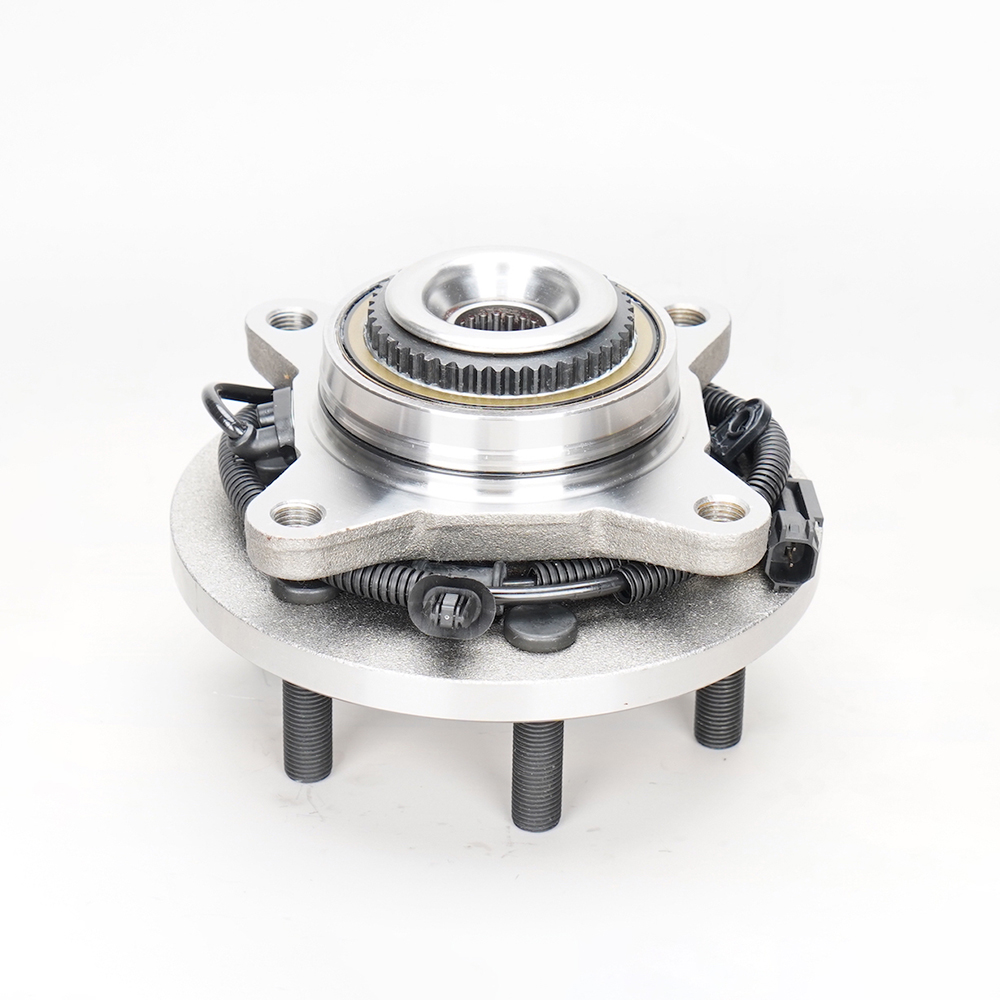
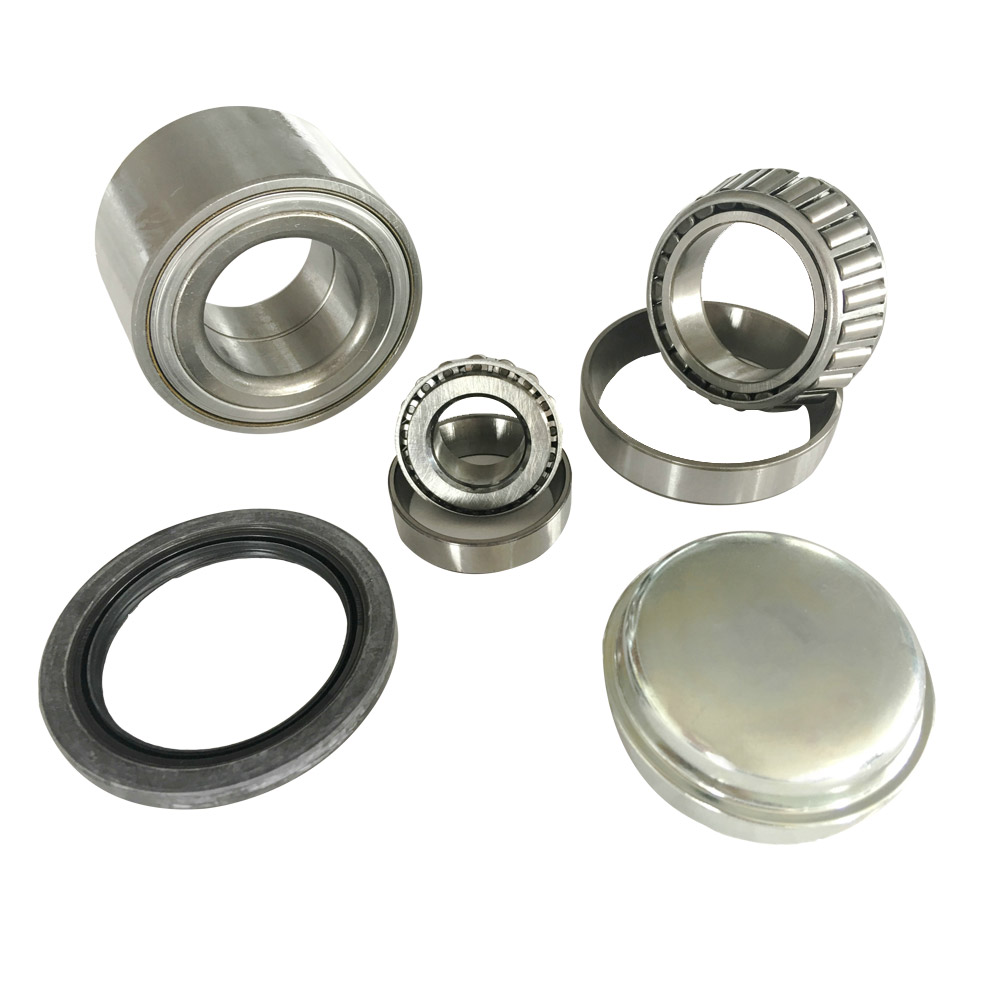
A wheel bearing hub assembly unit — also called a hub bearing unit or wheel hub bearing — is a pre-assembled, pre-greased, sealed component that integrates the wheel bearing, the hub flange, and in most modern applications, an ABS wheel speed sensor ring into a single bolt-on unit. This integrated design replaced the older serviceable bearing arrangement — in which tapered roller bearings were packed with grease, adjusted for preload, and retained with a castellated nut and cotter pin — across most passenger vehicle applications from the 1990s onward. The shift to sealed hub units significantly reduced assembly complexity, eliminated the need for periodic bearing regreasing, and improved bearing preload consistency across production volumes.
Inside the unit, one or two rows of ball bearings or tapered roller bearings are arranged between the inner and outer races. The outer race is pressed into or forms part of the hub body that bolts rigidly to the steering knuckle. The inner race rotates with the hub flange — the face to which the brake rotor and wheel mount. This configuration allows the wheel assembly to rotate smoothly around a fixed axis while transmitting braking forces, cornering loads, and vehicle weight through the bearing to the suspension. Modern hub units use double-row angular contact ball bearings in the majority of passenger car applications, with tapered roller bearing configurations preferred in light truck and heavy-duty applications where higher radial and axial load capacity is required.
Generation Classification of Hub Bearing Units
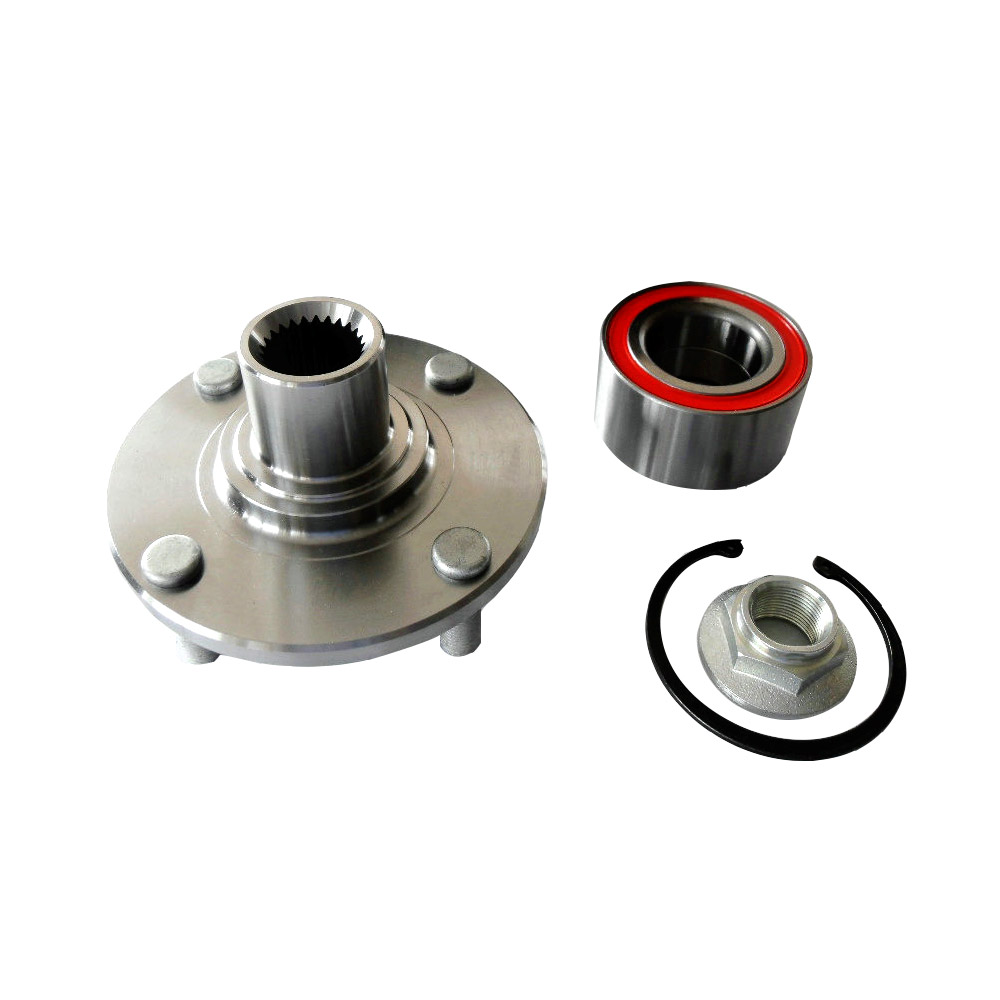
The automotive industry classifies wheel bearing hub assemblies into three generations that reflect progressive levels of integration and function. Generation 1 (Gen 1) units consist of a double-row bearing pressed onto a separate hub — they are not a fully integrated assembly and still require separate hub removal for installation. Generation 2 (Gen 2) units integrate the bearing outer race directly into a flange that bolts to the knuckle, with the hub as a separate inner rotating component. Generation 3 (Gen 3) units — the most common in current passenger vehicles — combine the inner and outer flanges, bearing, hub, and ABS tone ring into a single sealed, maintenance-free unit that bolts directly to the knuckle with typically three or four bolts and requires no pressing or specialized tooling for installation in most applications.

Warning Signs That a Wheel Bearing Hub Assembly Is Failing
Wheel bearing hub assembly failure rarely happens instantaneously — it progresses through recognizable stages that, if identified early, allow for planned replacement before the unit reaches a dangerous condition. The following symptoms, understood in the correct context, reliably indicate bearing deterioration.
- Cyclic humming or grinding noise: The most common and earliest symptom of wheel bearing wear is a low-frequency humming, droning, or growling noise that varies with vehicle speed and is not directly linked to engine RPM. As the bearing deteriorates further, the noise often intensifies and takes on a grinding or rumbling quality. Crucially, the noise typically changes character when the vehicle is steered left or right at speed — loading the bearing differently — which helps identify which corner is affected. A noise that worsens when steering right usually indicates the left front bearing is failing, and vice versa, because the lateral load shifts weight onto the bearing on the inside of the turn.
- Excessive wheel play or looseness: A failed or severely worn hub bearing will allow measurable movement of the wheel relative to the hub when the wheel is grasped at the 12 and 6 o'clock positions and rocked. Any detectable in-and-out movement (axial play) of more than approximately 0.05 mm in a sealed hub unit indicates bearing wear beyond acceptable limits. This test is best performed with the vehicle safely elevated and the wheel bearing unloaded, as loaded play can mask the true extent of wear.
- ABS warning light or traction control faults: Most Generation 3 hub units incorporate a magnetic encoder ring or tone wheel that works with the vehicle's ABS wheel speed sensor to provide vehicle speed data to the ABS and traction control modules. When the bearing is damaged, the encoder ring can become eccentric, corroded, or physically damaged, producing irregular or absent speed signals that trigger ABS warning lights, traction control faults, or stability control errors — sometimes before audible noise becomes apparent.
- Vibration through the steering wheel or floorboard: Advanced bearing deterioration — particularly in front wheel bearing hub assemblies — can produce a rhythmic vibration felt through the steering wheel or floorboard at specific speed ranges. This is distinct from tire balance vibration in that it does not respond to wheel balancing and is often accompanied by noise that changes with steering input.
- Uneven tire wear: A severely worn hub bearing that allows abnormal wheel angularity will cause the tire to wear unevenly — typically producing feathering or one-sided edge wear that does not respond to wheel alignment correction because the source is bearing deflection under load rather than static alignment error.
What Causes Wheel Bearing Hub Assembly Failure
Wheel bearing hub assemblies fail for a combination of reasons, and understanding the root cause is important for preventing premature failure of the replacement unit. Simply replacing a failed bearing without addressing the underlying cause often results in the new unit failing significantly sooner than it should.
| Failure Cause | How It Damages the Bearing | Prevention / Correction |
| Normal fatigue wear | Spalling of bearing races after design life cycles | Replace at symptom onset; no prevention possible |
| Impact damage (potholes, curb strikes) | Brinelling — indentations in bearing races from shock load | Inspect after significant impact events |
| Seal failure / water ingress | Grease washout; corrosion of races and balls | Avoid high-pressure washing directly at hub seals |
| Improper installation torque | Preload distortion; accelerated fatigue | Always torque to specification with a calibrated torque wrench |
| Incorrect wheel nut torque | Flange distortion transmitting into bearing preload | Torque wheel nuts in star pattern to specification |
| Oversized tires or lifted suspension | Increased bearing load beyond design limits | Use heavy-duty rated replacement units for modified vehicles |
How to Select the Right Wheel Bearing Hub Assembly Replacement
Selecting a replacement wheel bearing hub assembly requires matching several interrelated specifications to the vehicle application, not simply finding a unit that physically fits the mounting pattern. The bearing's load rating, ABS sensor compatibility, material quality, and sealing system must all align with the original design intent to achieve comparable service life in the replacement unit.
OEM vs. Aftermarket Hub Units
Original equipment manufacturer (OEM) hub units are manufactured to the exact specification of the vehicle platform's design and carry the highest confidence in fit, function, and service life — but at a significant price premium, often 50 to 200% above quality aftermarket alternatives. For vehicles still within their service life where wheel bearing replacement is a routine maintenance event rather than a consequence of abnormal failure, a quality aftermarket unit from a reputable bearing manufacturer offers excellent value. Reputable aftermarket sources include SKF, Timken, FAG (Schaeffler), NSK, JTEKT (Koyo), and Moog — brands with established manufacturing quality standards and comprehensive application engineering databases. Budget hub units from unverified suppliers often use lower-grade steel, lower-precision bearing tolerances, and inferior sealing systems that result in significantly shorter service life, sometimes failing within 20,000 to 40,000 km compared to the 100,000 to 150,000 km expected of quality units.
ABS Compatibility and Sensor Type
Modern wheel bearing hub units for ABS-equipped vehicles incorporate either a passive magnetic tone ring — a toothed ring that generates an AC signal in a passive sensor — or an active magnetic encoder ring that works with an active Hall-effect sensor to produce a digital pulse signal. These two systems are electrically incompatible: installing a unit with a passive tone ring on a vehicle equipped with an active sensor system, or vice versa, will produce incorrect or absent ABS signals and trigger persistent fault codes that cannot be resolved without a correctly specified unit. Always verify the ABS sensor type on the vehicle before selecting a replacement, and confirm the replacement unit's encoder type matches. Many hub unit suppliers specify this in their application data as "active" or "passive" ABS, with the vehicle's original sensor type determining which is required.
Replacement Installation: Critical Steps for Long Service Life
Even a correctly specified, high-quality replacement hub unit will fail prematurely if installed incorrectly. The most common installation errors — using incorrect torque values, failing to clean mating surfaces, or using impact tools inappropriately — cause bearing preload distortion and stress concentrations that dramatically shorten the new unit's service life.
- Clean and inspect the knuckle bore and mating face: Before installing the new hub unit, thoroughly clean the knuckle bore or mounting face of all corrosion, dirt, and old thread locker. Light surface rust in the knuckle bore should be removed with fine emery cloth or a wire brush. Any burrs or raised metal from previous installation should be carefully filed flat — a contaminated or uneven mating surface introduces distortion into the bearing housing when the unit is bolted down, changing its internal geometry and preload from the designed specification.
- Apply anti-seize to mounting bolts, not mating faces: Apply a thin film of anti-seize compound to the bolt threads and under the bolt head bearing faces to facilitate future removal. Do not apply anti-seize, grease, or any lubricant to the hub unit's outer flange face or the knuckle mating surface — these surfaces must be clean and dry to prevent the unit from shifting under braking and cornering loads.
- Torque mounting bolts to specification in a cross pattern: Use a calibrated torque wrench to tighten the hub unit mounting bolts to the vehicle manufacturer's specified torque value — typically between 70 and 130 Nm for most passenger vehicle applications, though this varies significantly by platform. Tighten in a progressive cross or star pattern to seat the flange evenly without distorting it. Never use an impact wrench for final torquing of hub unit mounting hardware.
- Torque the axle nut correctly for drive axle applications: On driven wheels, the axle nut that retains the CV axle stub shaft through the hub bore is one of the most critical fasteners in the assembly. Correct torque values typically range from 180 to 320 Nm depending on the application, and many manufacturers specify new single-use prevailing torque nuts that should not be reused. Under-torquing allows the stub shaft to fret within the hub bore, causing accelerated wear of the hub splines and potential axle loosening. Over-torquing distorts the inner bearing race, increasing preload and accelerating fatigue.
- Verify ABS function after installation: After completing the installation and lowering the vehicle, use a scan tool to check for ABS fault codes before returning the vehicle to service. A correctly installed hub unit with a compatible ABS encoder should produce a clean, faultless ABS module reading. Persistent wheel speed sensor faults after installation indicate either an incompatible encoder type or a damaged wiring harness connector that should be addressed before the vehicle is driven.
Should You Replace One Side or Both?
A frequently debated question in wheel bearing hub assembly replacement is whether to replace only the confirmed failed unit or to replace both sides simultaneously — the same question that arises with other paired vehicle components like brake rotors, shock absorbers, and CV axles. The arguments on each side are both legitimate and depend on practical and economic factors specific to the vehicle and situation.
The case for replacing both sides simultaneously rests on the fact that matched pairs of hub units on the same axle typically accumulate similar mileage under similar conditions, meaning the surviving unit is likely approaching a similar stage of wear to the failed one. If labor cost is significant relative to parts cost — as it is on vehicles where hub replacement requires extensive suspension disassembly — replacing both sides in a single labor operation can be more economical than paying twice for the same labor when the second unit fails shortly after the first. For vehicles with high mileage, this preventive approach is often the most cost-effective decision.
The case for replacing only the failed unit is reasonable when the vehicle has lower mileage, when the second unit shows no symptoms and tests free of play, and when the hub unit can be accessed with minimal additional labor. In these circumstances, replacing a functional bearing unit preemptively adds parts cost without clear benefit and is not always justified. The technician's assessment of the surviving unit's condition — including a spin test for roughness, a play check, and a noise evaluation — should guide the recommendation rather than a blanket policy either way.
Expected Service Life and Factors That Influence It
A quality wheel bearing hub assembly unit in a passenger vehicle driven on paved roads under normal conditions should deliver between 100,000 and 200,000 km of service life before requiring replacement. Several factors meaningfully influence where within this range any specific application falls, and understanding them helps set realistic expectations for both technicians and vehicle owners.
- Road surface quality: Vehicles regularly driven on rough, potholed, or unpaved roads experience significantly higher impact loads than highway-driven vehicles, accelerating bearing fatigue and seal wear. Vehicles operated in severe road conditions may require hub unit inspection and potential replacement at 60,000 to 80,000 km rather than the 100,000 km+ expected in normal service.
- Vehicle load and towing: Regularly loading a vehicle to its maximum gross vehicle weight or towing at or near maximum rated capacity places sustained high loads on wheel bearing hub assemblies beyond their normal operating point, reducing fatigue life. Vehicles used for regular heavy towing should be equipped with hub units rated for higher load capacity where available, and bearing condition should be checked more frequently than standard maintenance intervals suggest.
- Climate and corrosion exposure: Vehicles operated in regions with heavy road salt use during winter, coastal environments with salt air exposure, or tropical climates with high humidity experience accelerated corrosion of bearing seals and metal components. Sealed hub units in these environments may fail through seal corrosion and water ingress well before their mechanical fatigue limit is reached, making regular visual inspection of the hub unit seals a worthwhile maintenance step during annual brake service.
The wheel bearing hub assembly unit is a component where the cost of quality parts and correct installation pays compounding returns in safety, reliability, and total ownership cost. A correctly specified and installed unit from a reputable manufacturer, combined with early recognition of failure symptoms and disciplined installation technique, consistently delivers the service life it was designed to provide — making the entire subject of hub bearing replacement considerably more straightforward than its apparent mechanical complexity might suggest.
