


Content
- 1 What a Wheel Hub Bearing Does and How It Is Built
- 2 The Three Generations of Wheel Hub Bearing Design
- 3 Warning Signs That Your Wheel Hub Bearing Is Failing
- 4 How Long Wheel Hub Bearings Last and What Shortens Their Life
- 5 Wheel Hub Bearing Replacement: What the Job Actually Involves
- 6 What to Look for When Buying a Replacement Wheel Hub Bearing
The wheel hub bearing is one of the most structurally critical components on any vehicle, yet it rarely gets attention until something goes wrong. Sitting at the interface between the rotating wheel assembly and the stationary suspension system, the wheel hub bearing carries the entire weight of the vehicle while allowing the wheel to spin freely with minimal friction. When it begins to fail, the consequences range from annoying noise to genuinely dangerous loss of steering control. Understanding how wheel hub bearings work, how to identify failure early, and how to select the right replacement can save you significant money and prevent potentially serious safety incidents on the road.
What a Wheel Hub Bearing Does and How It Is Built
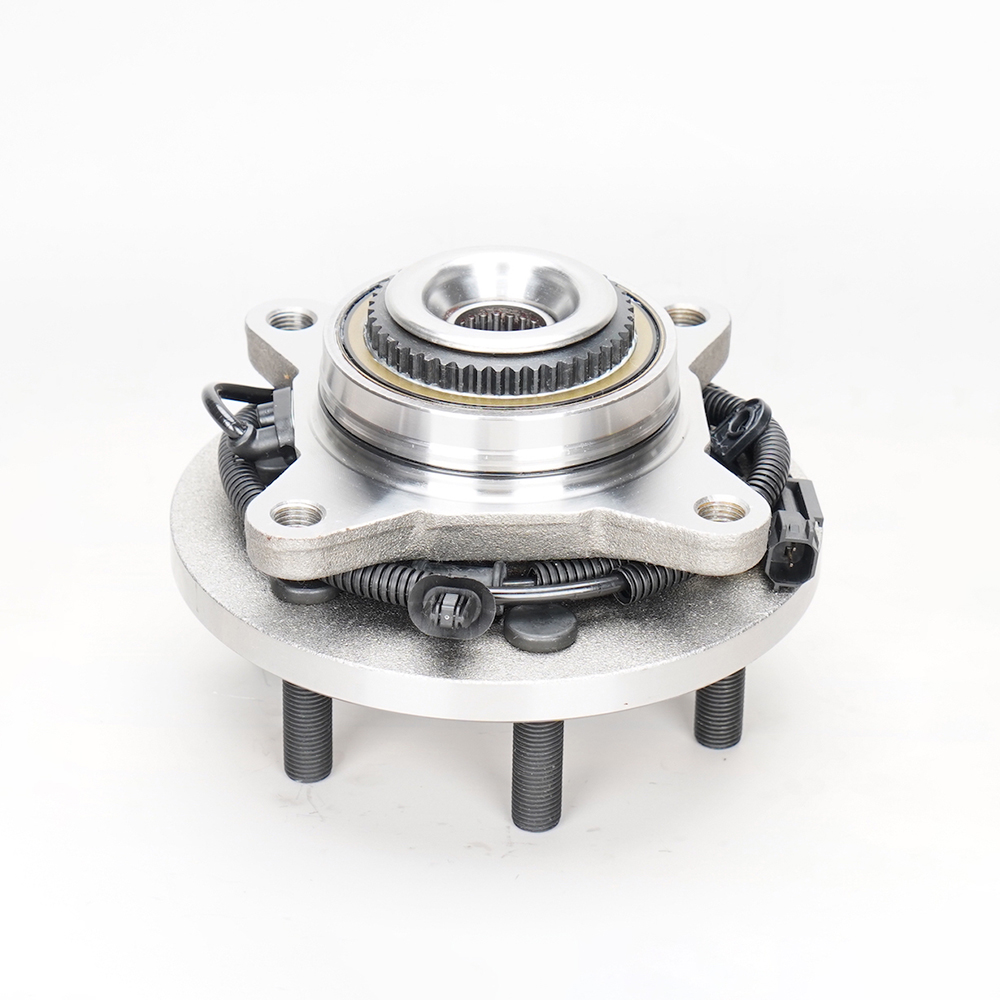
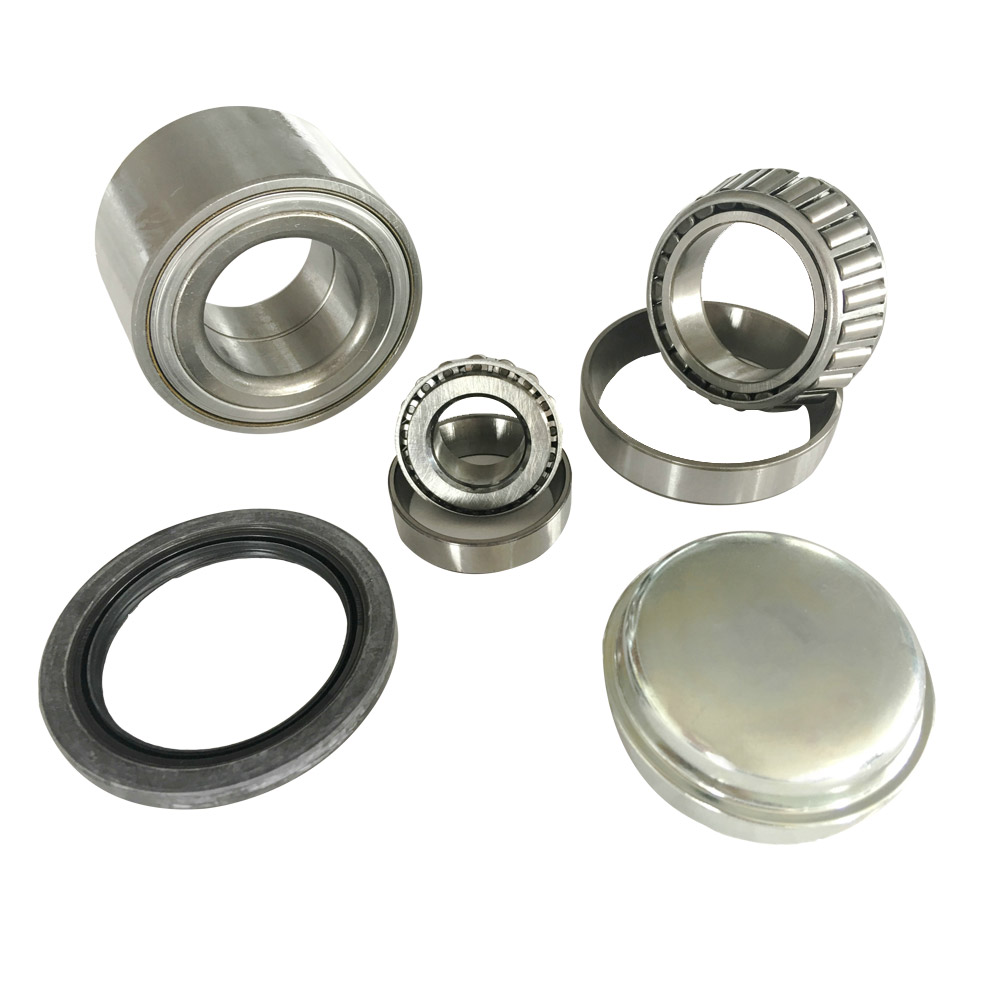
A wheel hub bearing serves two simultaneous functions: it supports radial loads — the downward weight of the vehicle pressing through the suspension — and axial loads, the lateral forces generated during cornering. In older vehicle designs, these were handled by two separate tapered roller bearings requiring periodic adjustment and repacking with grease. Modern vehicles use a sealed hub bearing unit, also called a wheel bearing hub assembly or Generation 3 hub unit, which integrates both inner and outer bearing races, rolling elements, seals, and in many cases an ABS sensor ring into a single pre-packed, pre-adjusted, and permanently sealed cartridge.
The rolling elements inside a wheel hub bearing are most commonly double-row angular contact ball bearings. The double-row configuration handles both radial and axial loads simultaneously, while the angular contact geometry allows the balls to carry thrust loads in both directions — critical during cornering when lateral forces shift dramatically. The entire assembly is packed with high-temperature lithium complex or polyurea grease during manufacture and sealed with low-friction rubber or PTFE seals designed to retain grease and exclude water, dust, and road contamination for the life of the bearing, typically rated at 150,000 to 300,000 km depending on operating conditions.
The Three Generations of Wheel Hub Bearing Design
Wheel hub bearings have evolved through three distinct engineering generations, each offering improvements in integration, installation simplicity, and performance. Knowing which generation your vehicle uses is important when sourcing replacement parts.
| Generation | Design Type | Installation Method | Common Vehicles |
| Gen 1 | Separate inner/outer races, loose bearing unit | Press-fit into knuckle; requires preload adjustment | Older passenger cars, light trucks pre-2000 |
| Gen 2 | Sealed cartridge unit without hub flange | Press-fit into knuckle; bolts to axle | Mid-2000s front-wheel-drive vehicles |
| Gen 3 | Fully integrated hub bearing unit with flange | Bolt-on directly to knuckle; no pressing required | Most modern passenger cars and SUVs |
Generation 3 units are by far the most common in vehicles manufactured after 2005. They include the wheel-mounting flange, ABS tone ring, and often the wheel speed sensor mount all in one assembly, making replacement a straightforward bolt-on procedure that does not require a hydraulic press or bearing preload measurement tools.
Warning Signs That Your Wheel Hub Bearing Is Failing
Wheel hub bearing failure rarely happens without warning. Recognizing the early symptoms allows you to schedule replacement before the bearing deteriorates to the point of causing safety issues or damaging other suspension and brake components.
Grinding or Humming Noise While Driving
The most common and earliest symptom of a failing wheel hub bearing is a grinding, humming, or growling noise that changes with vehicle speed. Unlike tire noise, which tends to be consistent, bearing noise often varies in pitch or intensity with speed changes and may shift when you gently steer left or right at highway speed. Loading the bearing in one direction by cornering reduces the noise on one side while loading the other — this load-shift diagnostic is a reliable way to identify which corner is affected. The noise is caused by worn or pitted rolling element surfaces and degraded raceway geometry inside the bearing.
Wheel Play and Looseness
A bearing that has lost its internal preload or has suffered race wear will exhibit measurable play in the wheel. To check this, raise the vehicle safely on a jack stand, grip the tire at the 9 o'clock and 3 o'clock positions and push/pull horizontally — side-to-side movement indicates lateral play. Then grip at 12 and 6 o'clock and rock vertically — movement here can indicate either bearing play or ball joint wear. More than about 0.05mm of radial play in a hub bearing is cause for replacement. Any detectable play in a wheel bearing represents a safety concern that should be addressed immediately.
ABS Warning Light Activation
Modern integrated hub bearing units include the ABS wheel speed sensor tone ring as part of the assembly. When a bearing begins to fail, the tone ring can become misaligned, damaged, or contaminated, causing irregular or missing speed sensor signals. The ABS control module detects this anomaly and illuminates the ABS warning light. If your ABS light is on without an obvious cause, scanning for wheel speed sensor fault codes and then inspecting the corresponding hub bearing is a logical diagnostic step.

Uneven Tire Wear and Vehicle Pulling
A severely worn hub bearing that allows excessive wheel runout can cause uneven tire contact with the road surface, resulting in scalloped or irregular tread wear patterns. In extreme cases, the angular misalignment caused by a collapsed bearing can make the vehicle pull to one side during braking. These symptoms typically only appear in late-stage bearing failure, when the bearing should have been replaced long before based on noise and play symptoms alone.
How Long Wheel Hub Bearings Last and What Shortens Their Life
A quality wheel hub bearing in normal operating conditions should last between 130,000 and 200,000 km. However, several factors can dramatically shorten bearing service life, and understanding them helps you protect the replacement bearing after installation.
- Pothole and curb impacts: A single hard impact from a pothole or curb strike can generate peak loads exceeding 10 times the normal operating load, permanently deforming the bearing raceways and initiating the wear process immediately. This is one of the most common causes of premature hub bearing failure on vehicles driven in poor road conditions.
- Water and contamination ingress: If the bearing seals are damaged — even slightly — road water, salt, and fine abrasive particles infiltrate the bearing and accelerate raceway wear dramatically. Vehicles driven in areas with heavy road salt use or frequent water crossings suffer disproportionately high bearing failure rates.
- Incorrect installation: Applying force to the wrong bearing race during press-fit installation, overtightening or undertightening the hub nut, or allowing the bearing to be dropped or shocked during handling can introduce pre-existing damage that drastically reduces service life. Always follow the manufacturer's specified hub nut torque precisely.
- Oversized tires and wheels: Fitting larger-diameter or wider tires than specified increases the moment arm of lateral forces during cornering, placing higher-than-designed axial loads on the hub bearing over every cornering event. This accelerates fatigue failure of the rolling elements and races.
- Towing beyond rated capacity: Towing or carrying loads beyond the vehicle's rated capacity consistently overloads all suspension components, including hub bearings, reducing their effective service life significantly.
Wheel Hub Bearing Replacement: What the Job Actually Involves
For Generation 3 bolt-on hub units — by far the most common type on modern vehicles — replacement is a job within the reach of a competent DIY mechanic with the right tools. The general procedure involves the following steps:
- Loosen the hub nut (axle nut) while the wheel is still on the ground and weight is on the bearing, using the correct socket size — typically 28mm to 36mm — and a breaker bar. Hub nuts are torqued to 180–280 Nm on most passenger vehicles and should not be loosened with an impact wrench alone without proper counterholding.
- Raise and support the vehicle safely, remove the wheel, and disconnect the brake caliper and rotor to access the hub assembly behind the knuckle.
- Disconnect the ABS wheel speed sensor connector, being careful not to damage the wiring harness, which is often brittle and corroded on older vehicles.
- Remove the hub mounting bolts from the back of the knuckle — typically three or four bolts — and withdraw the old hub bearing unit from the knuckle bore. If the unit is seized due to corrosion, penetrating oil applied 24 hours in advance and careful use of a slide hammer or hub puller may be necessary.
- Clean the knuckle bore thoroughly, removing all corrosion and debris, then install the new unit, torquing all bolts and the hub nut to the vehicle manufacturer's specifications using a calibrated torque wrench.
Always use a new hub nut — most designs are single-use staked or prevailing torque nuts that should never be reused. Reusing an old hub nut risks under-clamping the bearing, which can allow internal play to develop almost immediately after installation.
What to Look for When Buying a Replacement Wheel Hub Bearing
The replacement hub bearing market is flooded with products at vastly different quality levels and price points. Choosing the right unit requires attention to several key factors beyond simply matching the part number.
- OEM or OEM-equivalent quality: Tier 1 bearing manufacturers such as SKF, FAG (Schaeffler), NSK, JTEKT (Koyo), and NTN supply original equipment bearings to vehicle manufacturers and also sell aftermarket units under their own brand. These units meet the original design specifications for load ratings, seal quality, and dimensional tolerances. Budget units from unknown manufacturers may fit physically but often use lower-grade steel, reduced-quality seals, and looser tolerances that result in significantly shorter service life.
- Integrated ABS compatibility: If your vehicle has ABS, confirm the replacement unit includes the correct tone ring configuration — either passive (magnetic) or active (Hall-effect encoder) — matching your vehicle's wheel speed sensor type. Fitting an incompatible unit will trigger ABS faults even if the bearing itself is otherwise correctly installed.
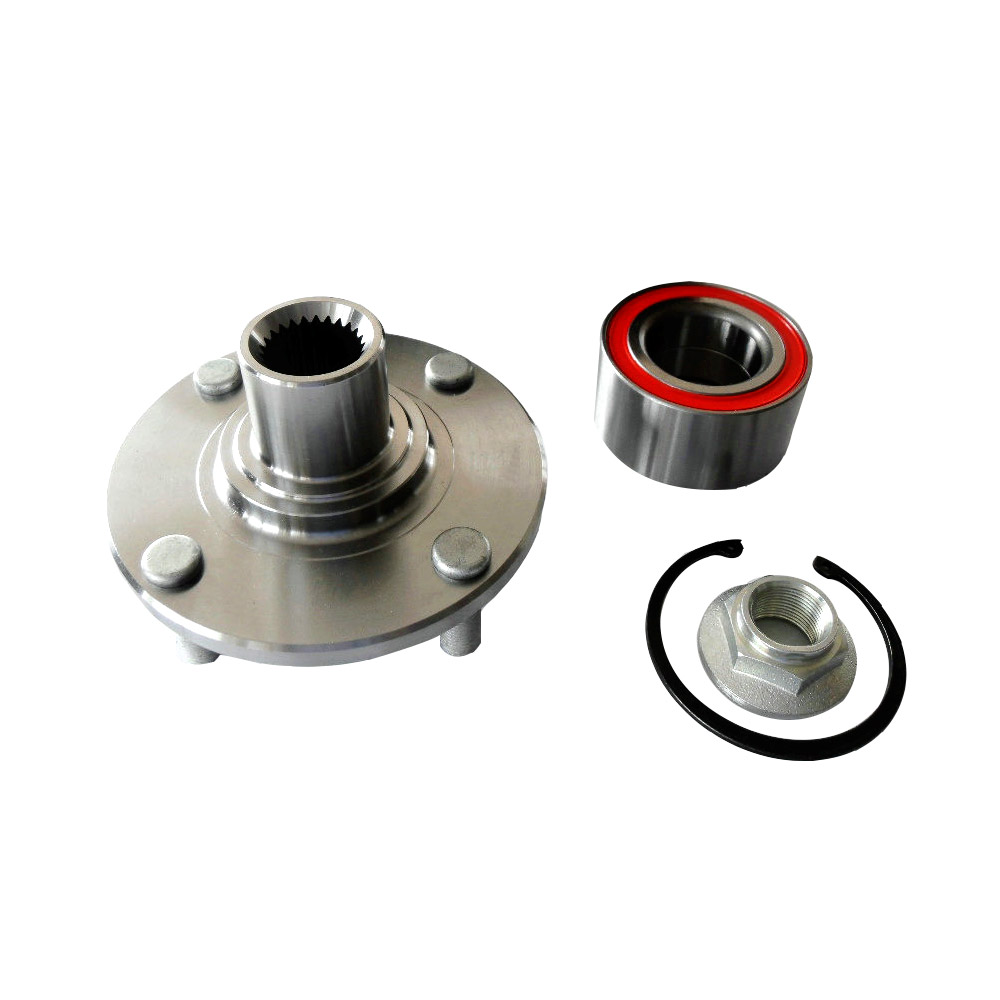
- Complete kit contents: Quality replacement hub bearing kits include the hub unit, a new hub nut, and in some cases mounting bolts. Confirm what is included before purchase to avoid a last-minute parts run during the job.
- Warranty coverage: Reputable manufacturers offer at least a 12-month or 20,000km warranty on hub bearing units. Warranties shorter than this or with extensive exclusion clauses are a signal of lower confidence in the product's durability.
- Verify fitment precisely: Hub bearings are vehicle-specific by year, make, model, engine, and drivetrain configuration. A front hub bearing for a front-wheel-drive vehicle differs from a rear hub bearing on the same model. Always verify fitment using the vehicle's VIN in addition to the model description to avoid receiving a dimensional match that is not the correct specification for your exact variant.
The wheel hub bearing is a small component that carries an enormous responsibility. Catching its failure early through attentive listening and periodic wheel play checks, choosing a quality replacement from a reputable manufacturer, and following correct installation torque procedures gives you the best possible outcome — a safe, quiet, and long-lasting repair that protects both your vehicle and everyone traveling in it.
