


Content
- 1 What a Wheel Hub Bearing Actually Does
- 2 Bearing, Hub Unit, or Spindle Kit: Sorting Out the Names
- 3 How a Failing Hub Bearing Announces Itself
- 4 Getting Fitment Right the First Time
- 5 When the Job Needs More Than a Bearing
- 6 What Separates a Durable Aftermarket Bearing from a Cheap One
- 7 How We Work With Distributors, Shops, and Do-It-Yourselfers
Most drivers do not think about a wheel hub bearing until it starts talking to them. Then it becomes the loudest sound in the car. A hum that rises and falls with road speed, a growl that shows up around 40 mph and fades when you turn the wheel, a vibration you feel through the floor instead of the steering wheel — that is usually a bearing race that has lost the smooth surface it was built with.
We are WHB America LLC, a packing and distribution company based in Novi, Michigan that has been shipping wheel hub assemblies and wheel hub bearings since 2015. The questions we hear have not changed much in all that time: which part do I actually need, will it fit, and how do I avoid doing the job twice? This guide answers those questions in plain language, without the sales pitch.
What a Wheel Hub Bearing Actually Does
Every wheel on your vehicle rolls on a bearing. That bearing carries the weight of one corner of the car, absorbs the side loads that appear in every turn, and takes the hit when a pothole arrives without warning. It is a small part doing a job that never pauses while the vehicle is moving, which is exactly why it tends to wear out slowly and then fail suddenly.
Modern hub bearings are sealed units, greased and pre-loaded at the factory. There is nothing to re-pack and nothing to adjust — when the rolling surfaces wear, the assembly is replaced. On many vehicles built in the last twenty years, the bearing also carries an ABS wheel speed sensor and tone ring, so a bearing that is beginning to fail can trigger a dashboard warning long before it becomes audible.
Tapered designs on older rear axles and heavier trucks behave a little differently from the sealed ball and roller units used up front, but the diagnosis is similar: noise, play, or a sensor fault that traces back to the same corner of the car.
If you want the mechanical picture in more detail, we keep a short explainer on how a wheel hub bearing works and why it matters for anyone who likes to understand the part before buying it.
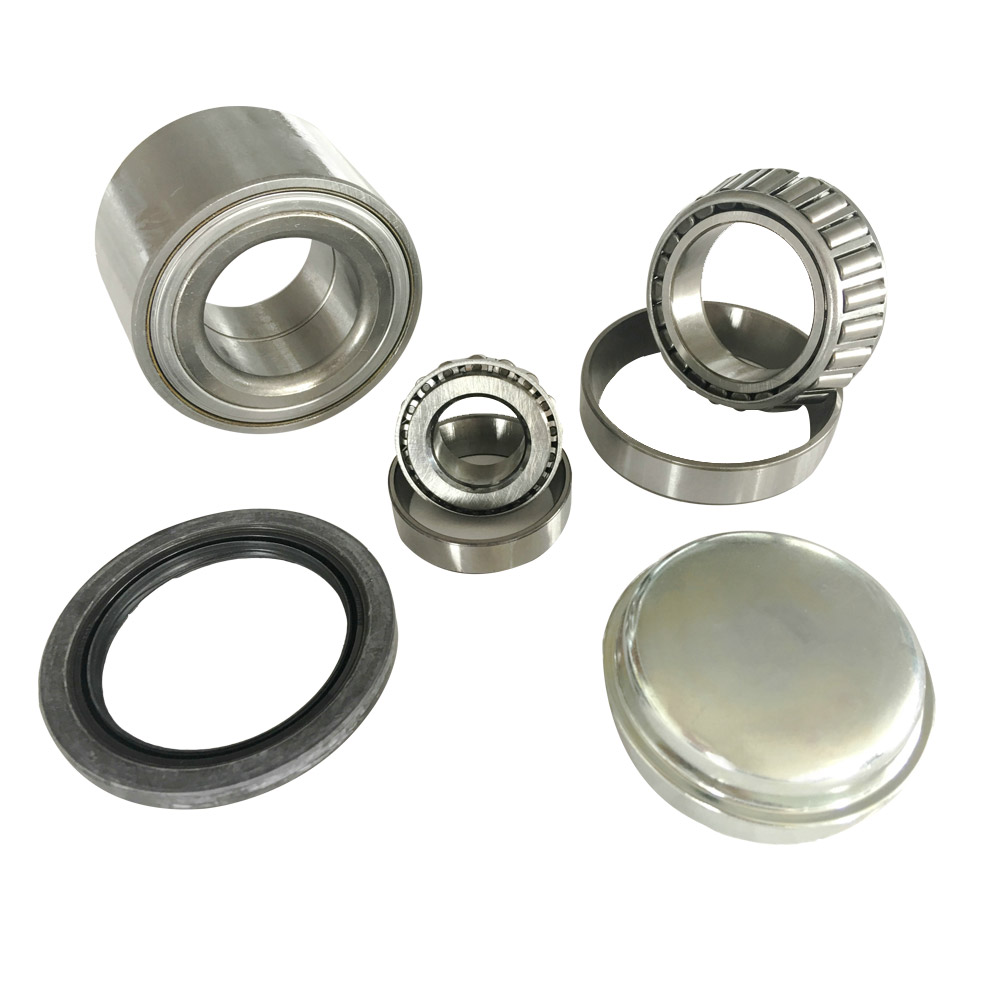 WHB America Wheel Hub Bearing for Cars and Light TrucksFirst-generation wheel hub bearing for cars and light trucks, available in ball or roller structure; follows the hub-bearing explainer and precedes catalog naming comparisons.View Product →
Bearing, Hub Unit, or Spindle Kit: Sorting Out the Names
The naming used across catalogs is not perfectly consistent, and that trips up even experienced counter staff. Different suppliers use different words for parts that overlap. Here is the way we describe the three families we stock and ship every day.
| Product family | What it usually includes | Common repair situation | What to confirm before ordering |
|---|---|---|---|
| Wheel hub bearing | Bearing assembly, sometimes with an integrated flange or sensor | Noise, play, or an ABS fault on a corner that reuses the original spindle | Bore and outer diameter, ABS type, whether the bearing is pressed in or bolted on |
| Wheel hub unit | Bearing, hub flange, wheel studs, and sensor as one bolt-on assembly | Most front-wheel-drive front corners and many all-wheel-drive applications | Bolt pattern, flange diameter, connector shape and pin count, brake rotor clearance |
| Wheel hub spindle kit | Hub assembly plus spindle or mounting hardware | Damaged spindle, stripped threads, or rusted fasteners that will not survive removal | Thread size, spline count, and whether the hardware is included |
Because these categories overlap in the real world, the safest approach is to describe the vehicle and the symptom rather than only a part name. Year, make, model, engine, drive type, and whether a warning light is on will usually narrow the list to a handful of numbers.
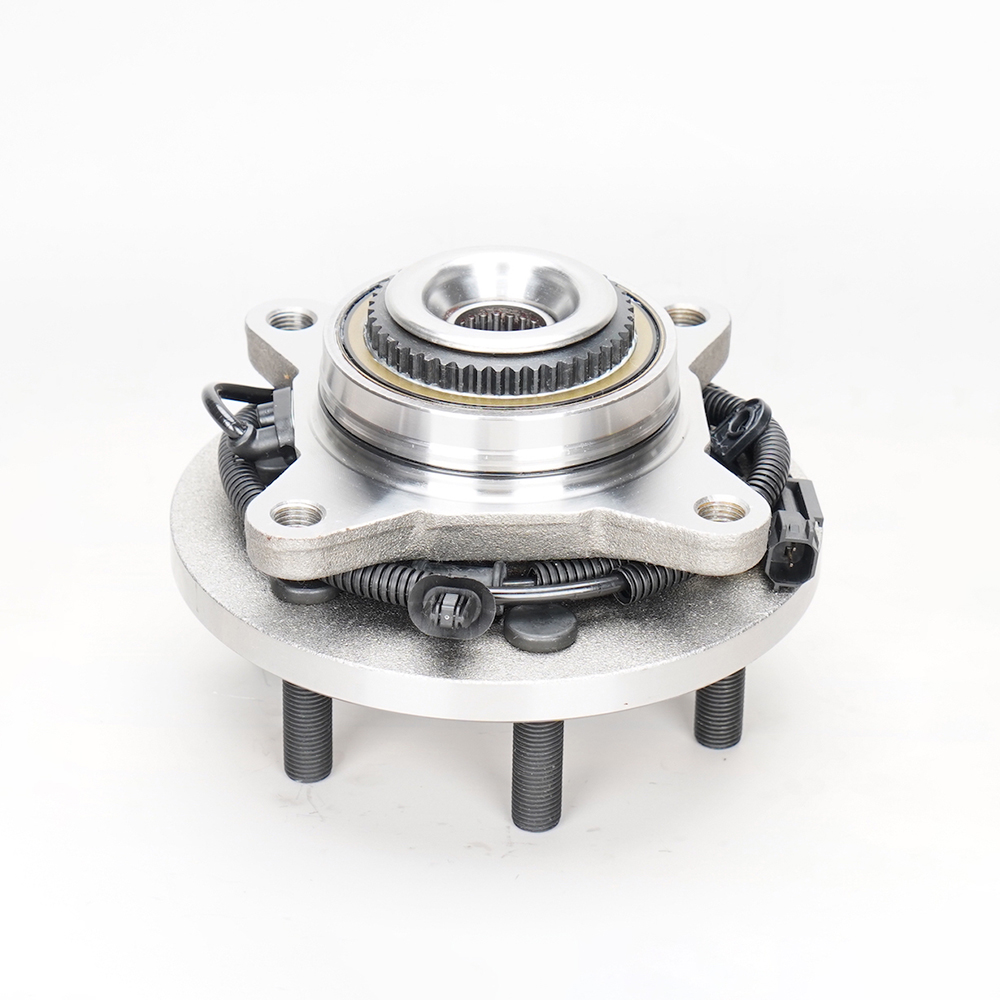 OEM Wheel Bearing Hub Assembly UnitOE-standard wheel bearing hub assembly unit for cars and light trucks, built from ball bearings, roller bearings, and hub spindles; useful before diagnosing warning signs.View Product →
How a Failing Hub Bearing Announces Itself
Bearings rarely fail without warning. They give you weeks, sometimes months of hints. These are the signs we hear about most often from the shops and drivers who call us:
- A rhythmic hum or growl that gets louder with speed and quieter when you slow down.
- Noise that changes when you turn — louder turning one way usually points to a loaded bearing on that side.
- Play in the wheel when the car is lifted, or steering that wanders slightly on the highway.
- An ABS, traction control, or stability light with no other obvious cause.
- Cupped or scalloped tire wear on a single corner.
- Vibration or a grinding feel that gets worse over a few hundred miles rather than appearing overnight.
Some of these symptoms also come from tires, alignment, or a worn suspension joint, so it pays to lift the car and check for play before ordering parts. Ten minutes with a jack and a pry bar saves a lot of return shipping.
Getting Fitment Right the First Time
A hub bearing is not a universal part, and the differences between two visually similar units are often a few millimeters of flange diameter or the shape of a sensor plug. Fitment comes down to details: trim level, drive type, whether the vehicle was built before or after a mid-year change, and whether the original corner used a bolt-on assembly or a pressed bearing.
The most reliable starting point is the VIN, followed by the OE number stamped or cast on the original part. Cross-referencing both is the habit that keeps comebacks low. When neither is available, measuring the flange, the stud pattern, and the connector is the next best thing.
If you are working through a list of vehicles rather than a single repair, our wheel hub product range covers three families with downloadable PDF lists for each, so you can check coverage before you commit to a stocking order.
When the Job Needs More Than a Bearing
Not every repair ends with a bearing. In the Midwest, where road salt does its work for five months a year, the spindle and fasteners around the bearing often look worse than the bearing itself. Threads strip, splines corrode, and a job that started as a one-hour replacement turns into a two-day problem.
That is where a spindle kit earns its place on the shelf. Buying the hub and spindle together costs more up front, but it removes the risk of finding a damaged spindle halfway through the job with the car already on stands and the customer waiting.
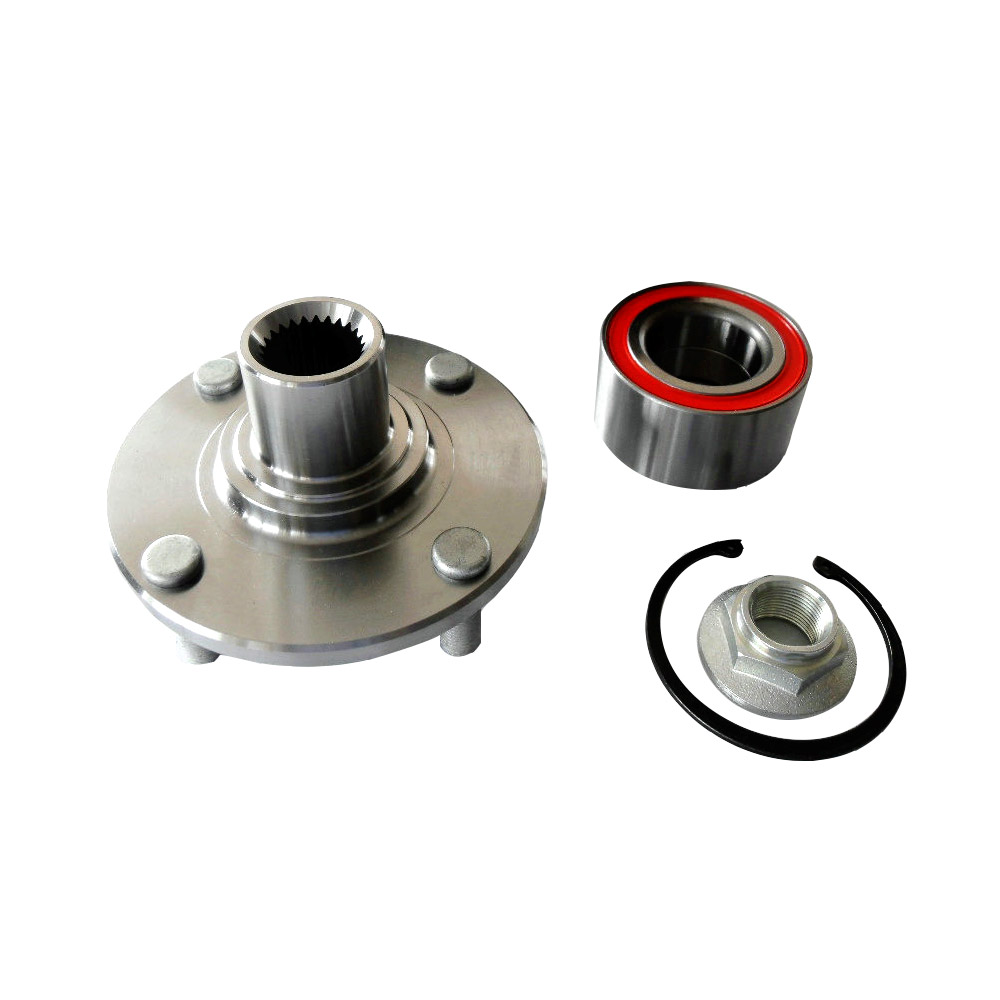 WHB America Wheel Hub Spindle KitsOE-standard wheel hub spindle kit with wheel flange, bearing c-clip, axle nut, and seals; reduces the risk of discovering a damaged spindle mid-job.View Product →
What Separates a Durable Aftermarket Bearing from a Cheap One
From the outside, two hub bearings can look nearly identical. The difference lives in the details you cannot see: the grade and heat treatment of the bearing steel, the number of sealing lips keeping road spray out of the race, the type and quantity of grease, and how consistently the preload is set on the assembly line.
Those details decide whether a part lasts 30,000 miles or 100,000. They also explain why a suspiciously cheap unit is rarely a bargain once labor is counted twice. When we evaluate a supplier, we look at the seal design, the sensor construction on units that carry one, the corrosion protection on the flange, and whether the production process is documented rather than described.
How We Work With Distributors, Shops, and Do-It-Yourselfers
Our own warehouse sits in Novi, Michigan, a short drive from the Detroit manufacturing corridor. We chose that location for practical reasons: parts reach Midwest distributors and repair shops quickly, and operating costs stay low enough to keep pricing sensible. Sherman, who runs the company, brought more than 28 years of automotive bearing experience into it.
Our catalog covers more than 1,400 products developed specifically for the American market, with coverage of over 96 percent of aftermarket cars and light trucks on the road. Everything is designed and packaged to OE standards, and our quality control follows ISO and CE practice. We also develop parts to a customer's drawing or sample when a standard number does not exist, which happens more often than you might expect.
Whether you are a warehouse distributor planning a stocking order, a transmission or driveline shop that needs a part tomorrow, or a driver replacing a noisy front bearing on a Saturday morning, the same offer applies: straightforward answers, a list you can download and check, and a phone number that a person actually answers.
Wheel hub bearings are simple parts with an unsympathetic job, and the difference between a repair that lasts and one that comes back usually comes down to two things — the right number and a part built to hold up. If you are unsure which of those you have, tell us the vehicle and what you are hearing. That is the conversation we have been having since 2015, and it is the one we enjoy most.
