


Content
- 1 What Sets a Reliable Wheel Hub Bearing Supplier Apart
- 2 The Three Product Families Buyers Should Expect
- 3 How to Compare Suppliers: A Practical Checklist
- 4 OE-Based Design and Quality Control
- 5 Vehicle Coverage, Catalogs, and Part Lookup
- 6 Packaging, Stock, and Delivery from a US Warehouse
- 7 Custom Development and Private Label Programs
- 8 Questions to Ask Before You Place a First Order
Ask anyone who runs a parts counter or a repair bay about wheel hub bearing suppliers, and you will hear the same answer: a supplier is judged by the last part that came out of the box. A bearing that drops in cleanly and runs quietly for tens of thousands of miles sells the next order. A bearing that fits but rumbles after a few thousand miles comes back as a comeback, a warranty claim, and a customer who stops trusting the counter that sold it.
We have spent years on this side of the business, developing, packaging, and distributing wheel hub assemblies and wheel hub bearings from Novi, Michigan, with more than 28 years of automotive bearing experience behind the product line. What follows is how we would evaluate a supplier if we were the buyer instead of the seller: what to check, what to ask, and what separates a catalog that simply looks complete from one that actually covers the vehicles on the road.
What Sets a Reliable Wheel Hub Bearing Supplier Apart
The vocabulary on this side of the market is loose. Some buyers say wheel hub bearings, some say hub assemblies, and some say hub units, often meaning the same box on the shelf. A serious supplier should be able to explain the difference without hesitation and tell you which design fits a specific application, because the wrong answer here leads to returns.
In practice, the suppliers that hold up over time tend to share a handful of traits:
- They publish fitment data you can check before you buy, not after the part is installed.
- They design to OE dimensions and tolerances rather than to whatever is easiest to produce.
- They hold stock locally, so a reorder does not depend on a container clearing a port.
- They answer technical questions directly, in the language your counter staff actually uses.
- They can scale from a single unit to a program order without changing the part inside the box.
None of these things are glamorous. Together, they are the difference between a supplier you reorder from and one you keep as a backup.
The Three Product Families Buyers Should Expect
A complete wheel-end program usually spans three categories, each aimed at a different repair. If you are mapping a supplier's range, start with the full product overview and confirm that all three are covered before you look at pricing.
Wheel Hub Bearings
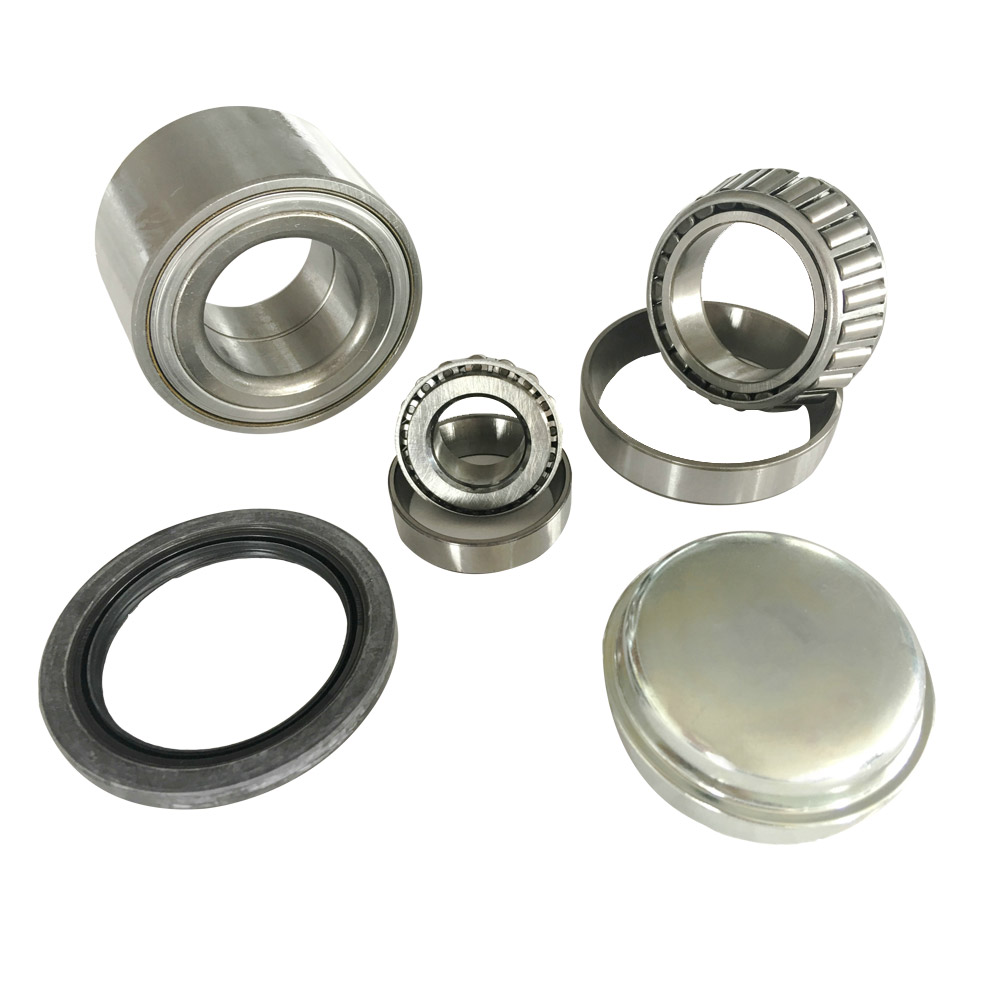
Many vehicles still use a serviceable bearing pressed into a knuckle or hub. These are typically tapered roller or ball designs, and the quality difference shows up in steel grade, heat treatment, raceway finish, and the seal that keeps water and road salt away from the rolling elements. A bearing is a small part, but it carries the weight of the corner and absorbs every pothole the driver finds.
 WHEEL HUB BEARINGThe function of the hub unit is to load and provide precise guidance for the rotation of the hub. It is a very important safety part for bearing axial load and radial ...View Product →
Wheel Hub Units and Assemblies
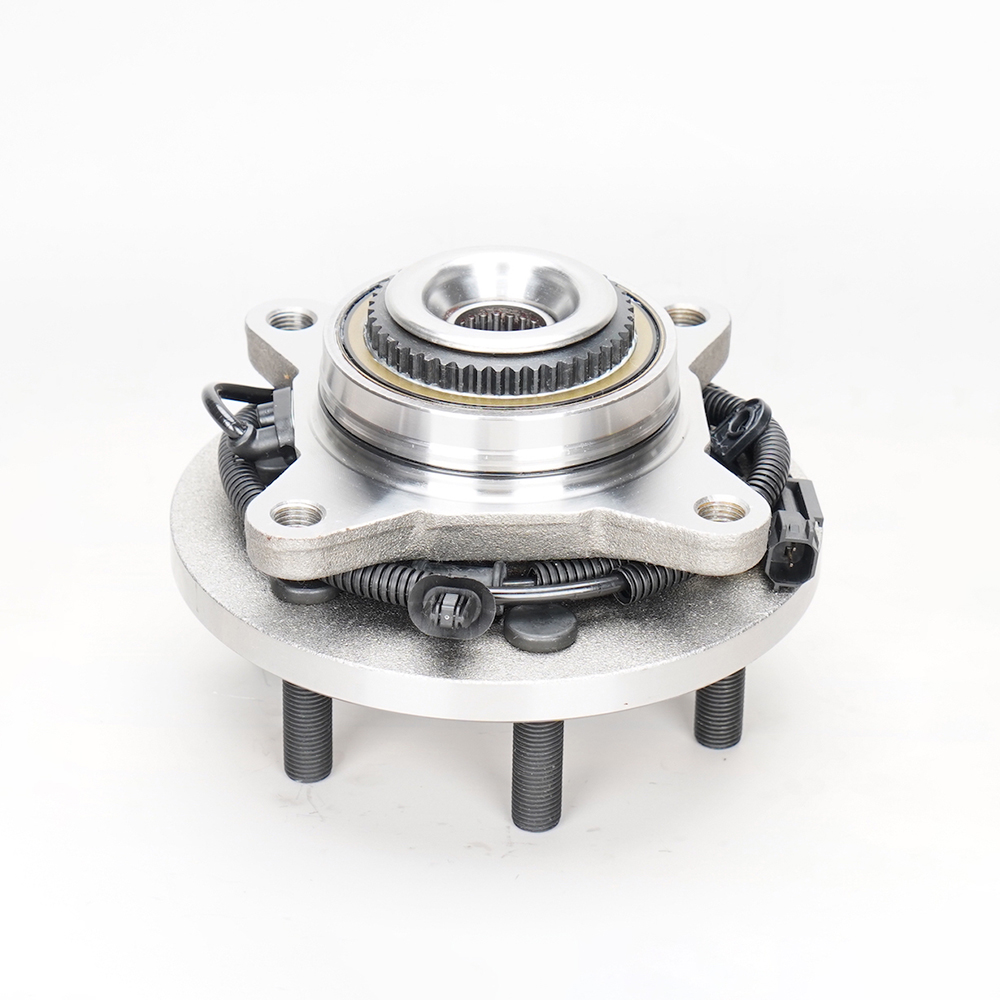
On a large share of modern passenger cars and light trucks, the bearing, hub flange, and wheel-speed sensor are combined into a sealed unit that bolts on as one assembly. Installation is faster, there is no bearing preload to set, and the sensor connection is already handled. For shops, that means less bay time and fewer comebacks caused by installation error.
 WHEEL HUB UNITThe function of the hub unit is to load and provide precise guidance for the rotation of the hub. It is a very important safety part for bearing axial load and radial ...View Product →
Wheel Hub Spindle Kits
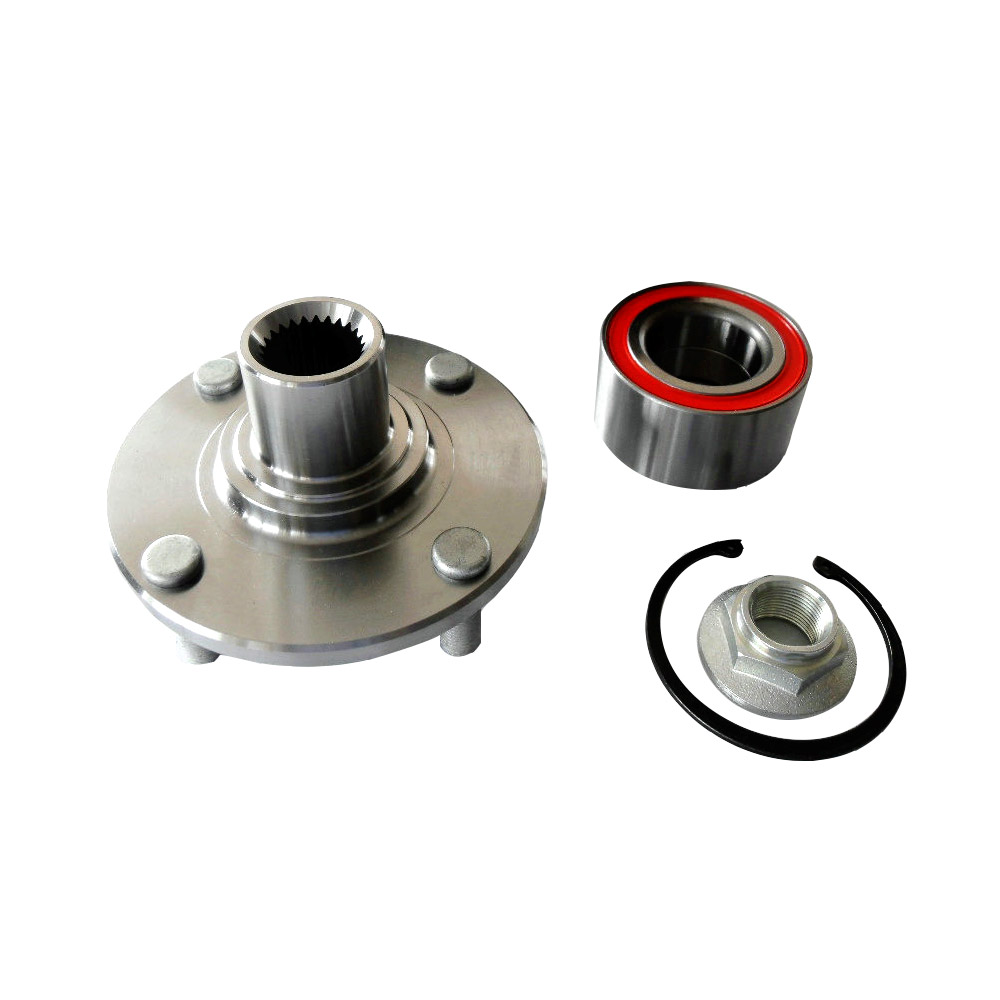
When a worn spindle or a damaged knuckle is part of the job, a kit that packages the bearing, spindle, seals, and fasteners together saves a second trip and a second freight charge. Kits are also easier to stock, because the counter only has to look up one number instead of assembling five.
 WHEEL HUB SPINDLE KITS* Contains wheel flange, bearing c-clip,axle nut and sealsView Product →
How to Compare Suppliers: A Practical Checklist
Price per unit is the easiest number to compare and the least useful on its own. The table below is the checklist we would bring to a first meeting with any supplier, including ourselves.
| What to verify | Why it matters | What good looks like |
|---|---|---|
| Vehicle coverage | Gaps in coverage become lost sales and special orders | 1,400 or more SKUs covering the large majority of US aftermarket cars and light trucks |
| Fitment data | Wrong lookups create returns and unhappy installers | Downloadable lists keyed to year, make, and model |
| Design standard | Off-spec dimensions cause noise, play, and premature wear | Dimensions and tolerances matched to OE drawings |
| Quality system | Consistency between the sample and the tenth shipment | Documented control built around ISO and CE requirements |
| US stock position | Repair shops cannot wait weeks for a hub unit | A domestic warehouse that ships rather than promises |
| Custom and private label | House brands and specialized lines need a partner, not a trader | Development from your drawing or sample, including packaging |
OE-Based Design and Quality Control
Every product we sell is developed against OE dimensions and packaged around those dimensions. That sounds like marketing until you see what happens when it is missing. If you want a plain-language look at the failure modes, our team wrote a short piece on what actually happens when a wheel hub bearing fails, from the first rumble to the point where the corner is no longer safe.
Quality control is where a supplier's real habits show up. We work to ISO and CE requirements and apply strict incoming, in-process, and outgoing checks, so the part in the tenth carton matches the part in the first. Control over the process, from raw material sourcing through assembly and packing, is also what keeps pricing stable when steel markets move. A supplier who only buys finished goods cannot make that promise.
Vehicle Coverage, Catalogs, and Part Lookup
Coverage is the number that decides whether a supplier can be your primary source or just a fill-in. Our catalog covers more than 96 percent of the aftermarket vehicles on US roads, and the range is broadest in the cars and light trucks that fill independent shops every day. That breadth matters most for the vehicles that are now in their second or third owner, where OE parts are expensive and availability through the dealer network is inconsistent.
Coverage is only useful if it is searchable, so we publish downloadable product lists for each category and keep a part lookup on the site. Your counter staff can confirm an application in seconds, which is exactly how it should work during a busy afternoon.
Packaging, Stock, and Delivery from a US Warehouse
An American supplier solves an American problem: time. We operate out of Novi, Michigan, chosen for its position inside the Detroit automotive corridor, its skilled local workforce, and its reasonable operating costs. Being local lets us ship quickly, handle co-packing and private-label programs without a long supply chain, and quote pricing that reflects controlled production rather than brokerage.
We also keep enough production capacity and raw material control upstream to keep the line running. For a warehouse distributor, that combination of local stock and steady supply is worth more than a marginally lower unit price that arrives late.
Custom Development and Private Label Programs
Not every buyer wants the same program. Some need a house brand, some need a specific application that nobody currently catalogs, and some need packaging that matches a shelf plan. Our development team builds to customer drawings or samples, including tooling for molds that do not exist yet, and handles the packaging design on top of it.
Because we develop, produce, and distribute rather than resell, a custom request does not disappear into a chain of intermediaries. That is the practical advantage of dealing directly with the company that makes the part.
Questions to Ask Before You Place a First Order
Bring these to any first conversation, and listen for specifics rather than adjectives:
- Which year, make, and model ranges does your catalog cover, and can I see the list?
- Are dimensions and tolerances matched to OE drawings, and can you show the specification?
- What quality system governs production, and how is it documented?
- Where is your stock held, and what is a typical ship time for a restock order?
- Can you develop a part from my drawing or sample, and what is the lead time?
- Do you offer private-label packaging, and who handles the artwork and approval?
- How do you handle a warranty claim, and who is the technical contact when a shop calls?
A supplier who answers all seven clearly is worth a trial order. A supplier who deflects half of them is telling you something important.
We cannot learn your business in one conversation, and you should not learn ours from a single page. But if you sell, install, or drive a car, our paths will cross eventually, and the wheel end is usually where it happens. Start with the coverage numbers, ask the seven questions, and test the parts that matter most to your customers. The rest of the decision tends to make itself.
