


Content
- 1 What Custom Really Means in Wheel Hub Unit Manufacturing
- 2 The Engineering Details That Decide Whether a Hub Unit Survives
- 3 From Drawing to Production: How a Custom Program Runs
- 4 Coverage and Fitment: Reading the Numbers Behind a Catalog
- 5 Quality Control and Documentation
- 6 Supply, Packaging and Delivery From a Michigan Warehouse
- 7 Questions Worth Asking Any Custom Wheel Hub Unit Supplier
Wheel hub units sit at the point where safety, ride comfort and labor cost all meet, so the buying decision rarely comes down to price alone. A hub unit that fits correctly, seals properly and carries the right sensor geometry saves a distributor far more in returns and warranty claims than it ever costs in unit price. That is the world we work in every day at WHB America LLC, a co-packing and distribution company founded in Novi, Michigan in 2015, where our team has spent more than 28 years around automotive bearings. When a warehouse distributor or a national retail chain asks us about custom wheel hub units, the conversation almost always starts with the same question. What makes a manufacturer worth trusting with your part number?
This guide walks through how custom hub units are actually developed, where the engineering risk hides, and what to verify before you commit a shelf position or a container to a new supplier.
What Custom Really Means in Wheel Hub Unit Manufacturing
The word "custom" gets used loosely in this industry. In practice it usually means one of three things. The first is private-label packaging: an existing catalog part, your box, your part number. The second is dimensional customization, where flange offset, bolt pattern, spline count or sensor interface is adjusted to match a specific application. The third is full development, where a new number is built from a customer drawing or a physical sample, including seals, encoder rings and mounting hardware.
All three are legitimate, but they carry very different verification requirements. A packaging change mostly needs label and traceability control. A dimensional or full-development program needs tooling, first-article inspection and a validation plan, because nothing on the vehicle forgives a hub unit that is even slightly out of specification.
Our own catalog was built the third way. We design and package every product to OE standards, and we have developed more than 1,400 part numbers for the US market, covering over 96% of aftermarket sedans and light trucks.
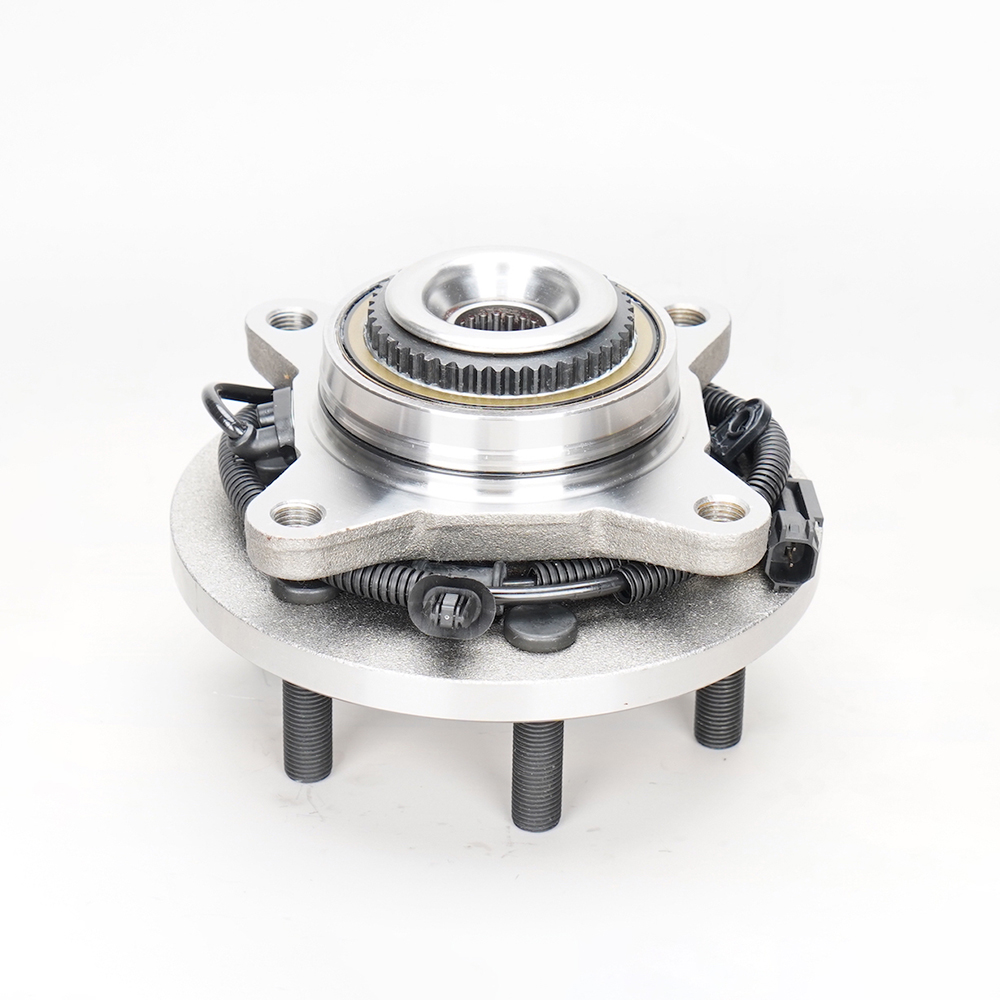
 WHEEL HUB UNITThe function of the hub unit is to load and provide precise guidance for the rotation of the hub. It is a very important safety part for bearing axial load and radial ...View Product →
A wheel hub unit is the bolt-on version of that idea: bearing, flange, studs and sensor interface delivered as one sealed assembly, which removes pressing and shimming from the repair bay and cuts comeback risk for the installer.
The Engineering Details That Decide Whether a Hub Unit Survives
Raceway geometry and steel quality
Two hub units can look identical on the outside and behave completely differently after 40,000 miles. Bearing life starts with steel cleanliness and heat treatment, then depends on raceway geometry and surface finish. Raceway roundness, contact angle and preload settings determine how load is distributed across the rolling elements. When those numbers drift, the unit still installs and still passes a short road test, and it fails months later in a way that lands back on your returns desk.
Seals, grease and sensor integration
Seals are the second half of the story. A low-quality lip seal or the wrong grease fill volume lets water and grit into the bearing, and no amount of steel quality will compensate. On modern vehicles the ABS encoder adds another failure point. Tone rings must produce a clean signal across the full speed range, and magnetic encoder rings have to be magnetized consistently, because an intermittent ABS light is one of the most expensive complaints a shop can chase.
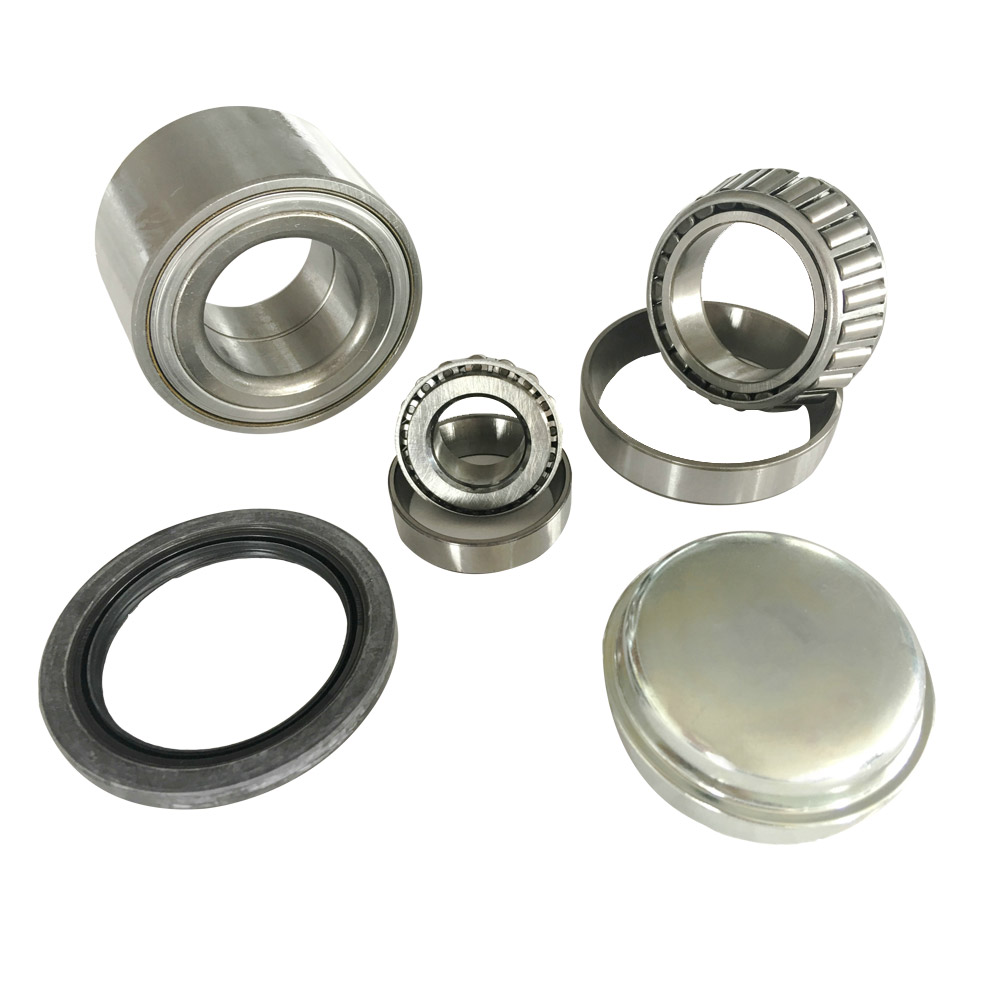
 WHEEL HUB BEARINGThe function of the hub unit is to load and provide precise guidance for the rotation of the hub. It is a very important safety part for bearing axial load and radial ...View Product →
That is why we treat seal design, grease specification and encoder testing as core engineering tasks rather than purchasing details, and why every production lot is checked against the same approved reference sample.
From Drawing to Production: How a Custom Program Runs
A well-run custom program is predictable. Ours follows a sequence that keeps surprises on the engineering side of the desk rather than in the warehouse:
- Application review: vehicle data, OE reference numbers and expected annual volume are confirmed.
- Sample or drawing evaluation: the customer sample or drawing is measured and fitment questions are resolved before tooling starts.
- Tooling and prototype: molds, dies and fixtures are produced and prototype parts are assembled.
- Validation: dimensional reports, material certificates, hardness, grease weight and sealing checks are completed, along with fitment trials.
- First article approval: the customer signs off on the parts and the packaging before volume production begins.
- Production and repeat orders: tooling is maintained, and each batch is checked against the approved first article.
Two things make this work in practice. Someone on the supplier side has to own the application data, not just the part geometry. And the packaging specification has to be settled early, because retail chains, warehouse distributors and drivetrain shops each have very different labeling, carton and pallet requirements.
Coverage and Fitment: Reading the Numbers Behind a Catalog
Aftermarket coverage claims deserve a close look. The growing opportunity for newcomers in the wheel hub unit industry has attracted plenty of capacity, but coverage and correctness are not the same thing, and that gap is where most sourcing mistakes begin. A figure like 96% of vehicles means little unless the underlying list is current and the fitment details are specific.
| Product family | Typical repair scenario | What buyers should confirm |
|---|---|---|
| Wheel hub bearing | Bearing replacement on a hub that is otherwise reusable | Bore and outer diameter tolerance, seal type, grease specification |
| Wheel hub unit | Complete bolt-on replacement including flange and sensor interface | Bolt pattern, flange offset, encoder type, wheel stud thread |
| Wheel hub spindle kit | Repair where the spindle or mounting hardware is also worn | Kit contents, hardware grade, spindle runout limits |
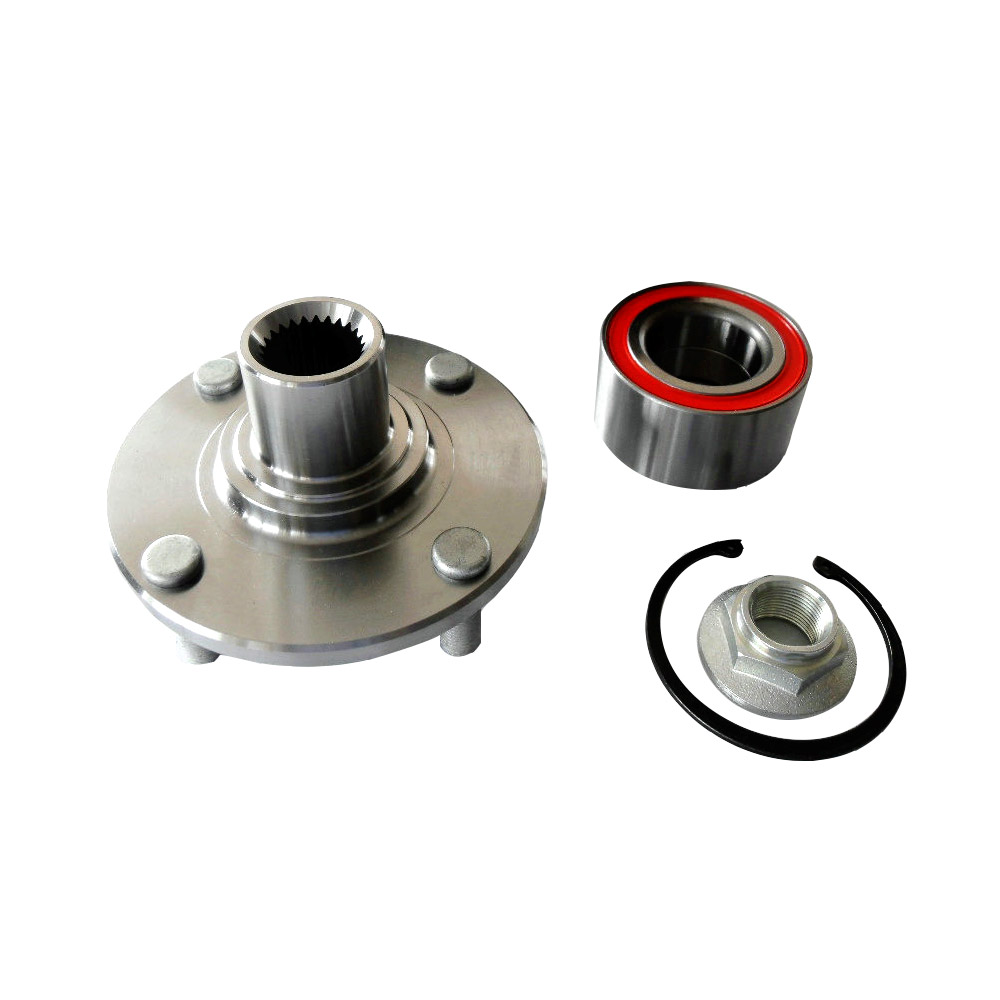
 WHEEL HUB SPINDLE KITS* Contains wheel flange, bearing c-clip,axle nut and sealsView Product →
For buyers, the practical check is simple. Take the twenty part numbers that move fastest in your region and request the matching dimensional sheets and fitment data. If a supplier answers that request quickly and consistently, the catalog is probably maintained rather than copied from an older list. Our own lists are published openly so distributors can compare numbers before they talk to us, including the wheel hub bearing list download.
Quality Control and Documentation
We work to ISO and CE standards, and we keep the control plan concrete. Incoming steel is checked before it reaches the line. Heat treatment hardness is verified per batch. Raceway roughness, bore diameter, flange runout and stud torque are measured against the approved first article. Grease fill weight is controlled by weight rather than by eye. Seals are inspected for lip contact and rotating torque. Assembled units go through end-of-line runout and noise checks, and sensor-equipped units are signal-tested before packing.
Documentation matters as much as the testing itself. Distributors who sell into warranty-sensitive channels need dimensional reports, material certificates, first-article inspection reports and batch traceability that can be matched to a specific shipment. If a supplier cannot produce those documents on request, the quality claim is really just a marketing statement.
Supply, Packaging and Delivery From a Michigan Warehouse
Lead time is a quality feature. That is a large part of why we operate as a US-based co-packing and distribution company out of Novi, Michigan, close to Detroit's manufacturing base and its parts distribution network. Local packing and warehousing let us serve warehouse distributors, national retail chains, drivetrain shops and individual buyers without the transit time of an overseas-only supply chain, and let us hold buffer stock on the numbers that move fastest.
On the production side, we control development and manufacturing processes and keep close oversight of raw material pricing, quality and continuity of supply, which is what makes a competitive landed cost possible without cutting into the bearing itself. Products are packed to customer specifications and shipped both domestically and to export markets.
Questions Worth Asking Any Custom Wheel Hub Unit Supplier
- Can you supply dimensional reports, material certificates and first-article inspection documents?
- Which steps of the process do you own in-house, and which are outsourced?
- How do you validate the ABS encoder signal on sensor-equipped units?
- What is your standard for seal type and grease fill, and how is it verified per batch?
- How long does tooling and first-article approval take for a new part number?
- What inventory do you hold locally, and what is your replenishment lead time?
- Can you pack and label to our retail or warehouse requirements from the first shipment?
Twenty-eight years around automotive bearings teaches one lesson that never stops being true: a hub unit either earns its place on the shelf or it becomes a returns problem, and the difference is decided long before the part ships. The manufacturers worth working with are the ones who can explain their geometry, their seals, their test data and their lead times without hesitation.
If you are sourcing custom wheel hub units, hub bearings or spindle kits, we are glad to talk numbers, coverage and timelines. Reach us at +1-248-864-2068, or start from the product families above and tell us which applications you need covered. It takes time to know a supplier, and we would rather earn that time one program at a time.
