


Content
- 1 What Is a Wheel Bearing Hub Assembly Unit?
- 2 OE Standard Manufacturing: Why It Matters for Aftermarket Parts
- 3 96% Aftermarket Coverage: What This Means in Practice
- 4 Recognizing Wheel Bearing Hub Assembly Failure Symptoms
- 5 Correct Installation Procedures for Hub Assembly Units
- 6 Packaging Standards and Their Role in Part Integrity
- 7 Evaluating a Wheel Bearing Hub Assembly Supplier
The wheel bearing hub assembly unit is one of the most structurally critical components in any vehicle's suspension and drivetrain system. It connects the wheel to the axle, supports the full weight of the vehicle, and enables smooth, low-friction rotation under demanding load conditions. When this component fails, it doesn't just cause noise or vibration — it compromises steering response, ABS sensor accuracy, and ultimately, driver safety. Choosing the right wheel bearing hub assembly unit, built to OE standards and offering broad vehicle coverage, is not a detail to overlook.
What Is a Wheel Bearing Hub Assembly Unit?
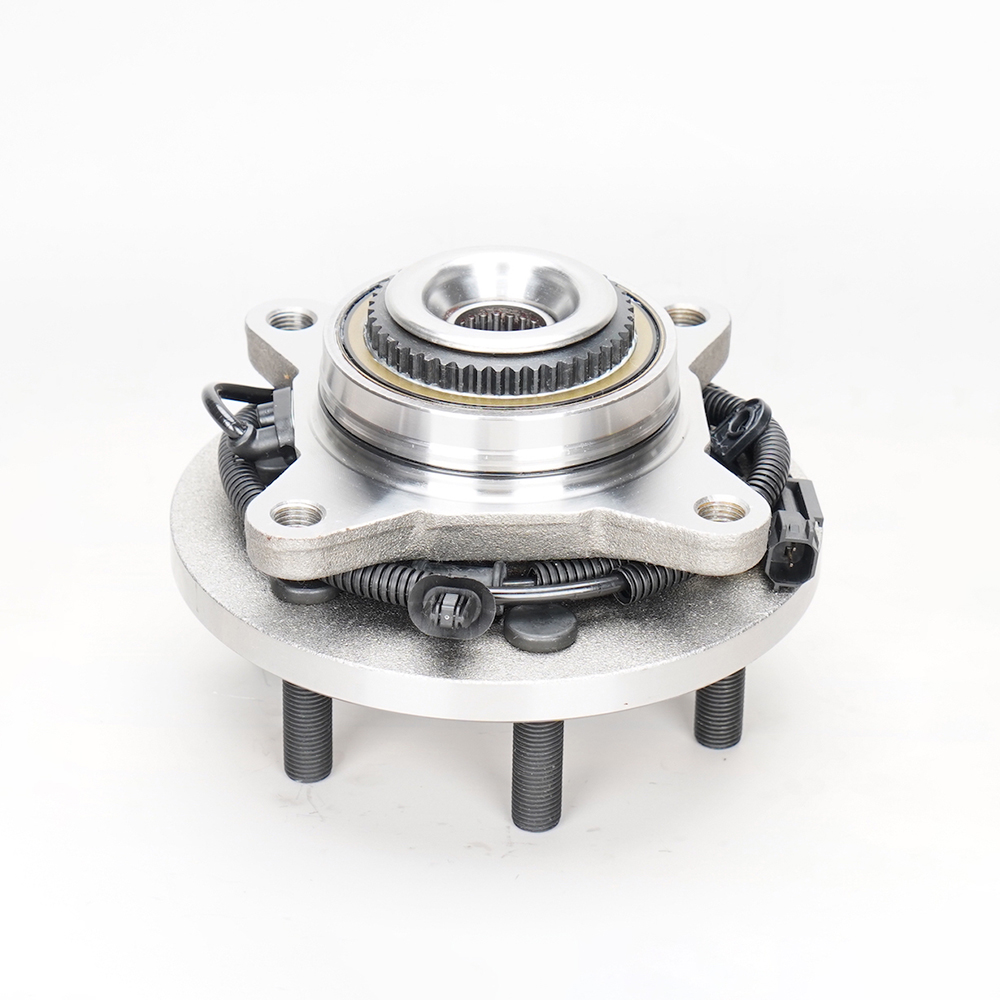
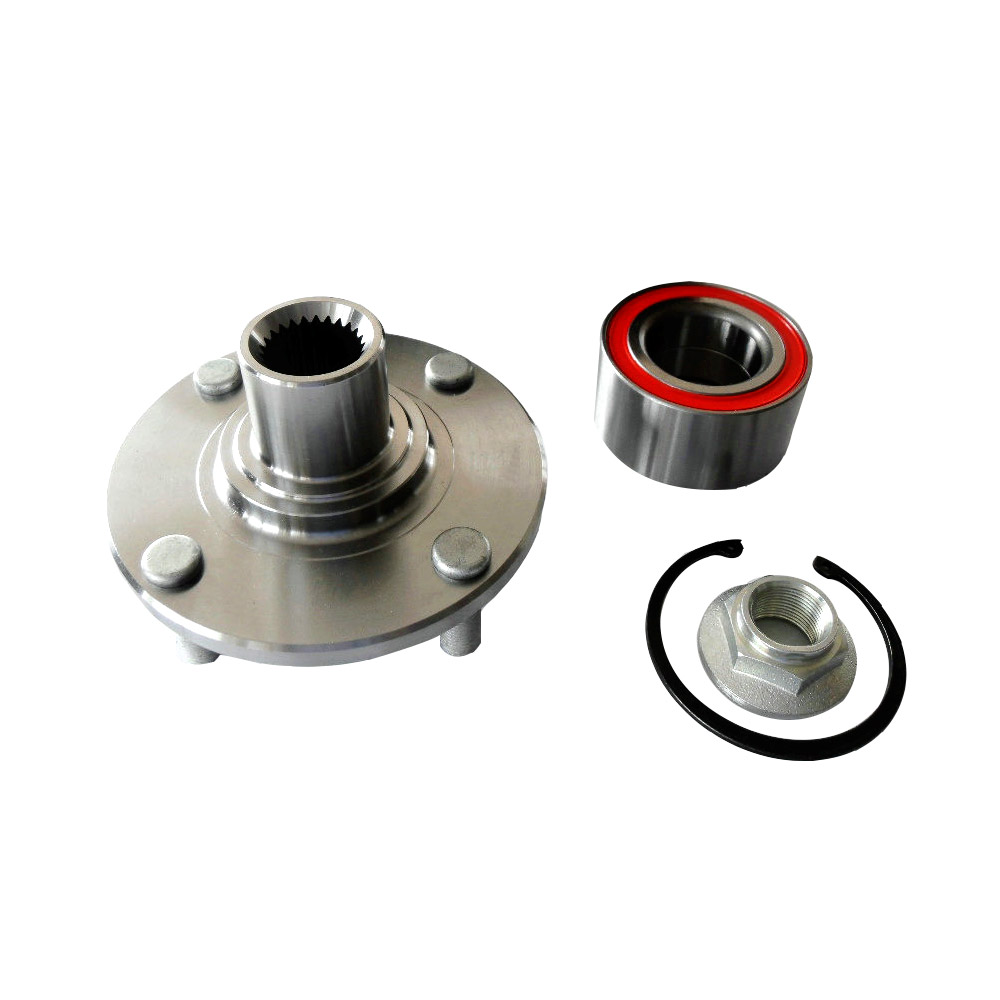
A wheel bearing hub assembly unit is a pre-integrated component that combines the wheel hub, bearing races, rolling elements, seals, and — in modern vehicles — an ABS tone ring or magnetic encoder into a single sealed unit. Unlike older serviceable bearing designs that required pressing individual components onto spindles, the modern hub assembly is engineered as a complete module, designed for direct bolt-on installation without specialized pressing tools or bearing preload adjustments.
This integrated design offers significant advantages in both manufacturing precision and field installation. Because all internal tolerances are set at the factory under controlled conditions, the assembled unit delivers consistent radial and axial load ratings from the first moment of installation. The sealed construction also eliminates the need for periodic greasing and protects internal bearing surfaces from road contaminants, moisture, and brake dust throughout the service life of the component.
OE Standard Manufacturing: Why It Matters for Aftermarket Parts
The term "OE standard" is used frequently in the aftermarket parts industry, but its practical significance is often misunderstood. OE — Original Equipment — standard means that the component is manufactured to the same dimensional, metallurgical, and performance specifications as the part originally installed by the vehicle manufacturer at the assembly plant. This is fundamentally different from "OE-style" or "OE-compatible" labeling, which may indicate only a superficial dimensional match without meeting underlying material or load-rating specifications.
For wheel bearing hub assemblies, OE-standard manufacturing encompasses several critical parameters:
- Steel grade and heat treatment: Bearing races and rolling elements must be manufactured from bearing-grade steel with precisely controlled carburizing and hardening processes to achieve the required surface hardness and fatigue life.
- Internal geometry tolerances: Race curvature, rolling element diameter uniformity, and cage geometry must conform to ISO and ABMA bearing standards to ensure correct load distribution and prevent premature spalling.
- Flange bolt circle dimensions: Hub flange drilling must match OE specifications exactly to ensure proper wheel centering and prevent fastener stress from wheel mounting.
- ABS sensor ring accuracy: Tone ring pole count and magnetic encoder positioning must match the vehicle's ABS control module expectations precisely, or wheel speed signal errors will trigger fault codes and disable the ABS system.
- Seal integrity and grease specification: Factory-packed grease type and quantity, along with seal lip geometry, must meet OE specifications to deliver the rated service life under operating temperatures.
Producing hub assemblies and designing their packaging based on OE standards — rather than reverse-engineering from worn samples — ensures that dimensional accuracy is traced back to verified vehicle manufacturer data. This is the foundation of achieving reliable fitment across a broad vehicle population.

96% Aftermarket Coverage: What This Means in Practice
Aftermarket coverage refers to the percentage of registered vehicles in a given market that a supplier's product catalog can service. Achieving over 96% aftermarket coverage for wheel bearing hub assemblies is a significant accomplishment that reflects both the breadth of the product range and the precision of vehicle-to-part cross-referencing.
For distributors, repair shops, and fleet operators, this level of coverage translates directly into operational efficiency. Rather than maintaining accounts with multiple specialized suppliers to cover different vehicle brands, a shop can consolidate purchasing with a single supplier whose catalog spans the overwhelming majority of vehicles they service. This reduces inventory complexity, simplifies ordering, and minimizes the risk of encountering an application gap during a repair job.
High coverage is only meaningful when backed by accurate application data. Each part number must be validated against the specific year, make, model, trim level, and drive configuration of the vehicles it is listed for. The following table illustrates the typical scope of vehicle categories covered by a comprehensive wheel bearing hub assembly product line:
| Vehicle Category | Drive Configuration | Hub Position | ABS Integration |
| Passenger Sedans | FWD / RWD / AWD | Front & Rear | Tone Ring / Encoder |
| SUVs & Crossovers | FWD / 4WD / AWD | Front & Rear | Tone Ring / Encoder |
| Light Trucks & Pickups | RWD / 4WD | Front & Rear | Tone Ring / Encoder |
| Minivans | FWD / AWD | Front & Rear | Tone Ring / Encoder |
| Compact & Economy Cars | FWD | Front & Rear | Tone Ring / None |
Recognizing Wheel Bearing Hub Assembly Failure Symptoms
Identifying a failing wheel bearing hub assembly early prevents the situation from escalating into a safety-critical event. Technicians and vehicle owners should be familiar with the progressive symptoms that typically accompany bearing degradation.
Audible Warning Signs
The most commonly reported early symptom is a cyclic humming, growling, or rumbling noise that increases in pitch and intensity with vehicle speed. Unlike tire noise, which changes significantly with road surface texture, bearing noise tends to remain consistent across different surfaces. A useful diagnostic technique is to slowly change lanes on a highway: if the noise diminishes when the vehicle leans toward the side with the suspect bearing and increases when leaning away, this confirms the bearing as the noise source. Clicking or snapping during low-speed cornering — particularly in front-wheel-drive vehicles — may also indicate bearing play or cage damage.
Handling and Vibration Indicators
As bearing internal clearance increases due to wear, the hub develops perceptible play that manifests as steering vagueness, shimmy through the steering wheel, or uneven tire wear patterns — particularly camber-related wear on the inner or outer tread shoulder. In severe cases, a worn bearing may produce a measurable wobble detectable by grasping the wheel at the 12 and 6 o'clock positions and checking for play. Any perceptible movement at this test indicates the bearing has progressed to a condition requiring immediate replacement.
ABS and Traction Control Fault Codes
Modern hub assemblies with integrated ABS encoders can trigger wheel speed sensor fault codes as bearing wear causes the encoder to wobble relative to the sensor. This produces an erratic wheel speed signal that the ABS module interprets as a sensor fault, illuminating the ABS warning light and potentially disabling stability control functions. A C-code ABS fault pointing to a specific wheel, in combination with bearing noise symptoms, is strong diagnostic evidence that the hub assembly at that wheel requires replacement.
Correct Installation Procedures for Hub Assembly Units
The service life of a new wheel bearing hub assembly is directly influenced by the quality of its installation. Even an OE-grade component can fail prematurely if subjected to incorrect torquing, impact installation forces, or contamination during fitting. Following correct procedures is essential to achieving the full rated service life.
- Clean all mating surfaces: Remove all corrosion, debris, and old thread-locking compound from the knuckle bore, mounting faces, and axle threads before installation. Corrosion buildup on mating surfaces creates uneven clamping forces that introduce bearing misalignment.
- Never use an impact gun on hub bolts without a torque stick: Hub assembly mounting bolts must be torqued to the manufacturer's specified value — typically between 60 and 130 Nm depending on vehicle class. Over-torquing introduces preload into the bearing that accelerates fatigue; under-torquing allows micro-movement that causes fretting corrosion at the mounting interface.
- Apply thread locker where specified: Some OE applications specify medium-strength thread-locking compound on hub mounting bolts. Follow the vehicle manufacturer's requirement rather than making this decision independently.
- Torque the axle nut with the vehicle weight on the wheel: For driven axle applications, the center axle nut must be torqued with the vehicle on the ground to correctly preload the bearing stack. Torquing with the wheel elevated can produce incorrect preload conditions.
- Verify ABS sensor clearance after installation: After fitting the hub, confirm that the ABS sensor is properly seated and that no debris is lodged between the sensor tip and the tone ring. Clear any stored ABS codes after installation and verify signal quality with a scan tool before returning the vehicle to service.
Packaging Standards and Their Role in Part Integrity
OE-standard manufacturing is only fully protected when complemented by OE-standard packaging. Wheel bearing hub assemblies are precision components whose internal seals, ABS encoder rings, and bearing surfaces can be damaged by improper packaging that allows component movement, moisture ingress, or contamination during shipping and warehousing.
Quality packaging for hub assemblies includes individual component protection with plastic end caps or foam inserts to prevent seal lip damage, moisture-barrier wrapping or desiccant inclusion to prevent corrosion on machined surfaces during long storage periods, and clearly printed part number and application data to eliminate misidentification at the point of installation. Packaging designed around OE data also includes correct torque specifications, installation notes, and hardware where applicable, giving technicians the information they need to install the part correctly without consulting additional references.
Evaluating a Wheel Bearing Hub Assembly Supplier
For distributors and repair facility buyers sourcing wheel bearing hub assemblies, supplier evaluation should extend beyond price comparison. The following criteria distinguish a supplier capable of consistently delivering OE-standard quality at commercial aftermarket scale:
- Documented use of OE vehicle data sources — not reverse-engineered samples — as the basis for product development and cross-referencing
- ISO/TS 16949 or IATF 16949 manufacturing certification, confirming automotive-grade quality management system compliance
- Third-party bearing fatigue life test reports demonstrating performance at or above OE load rating specifications
- ABS encoder validation data showing correct tone ring pole count and signal amplitude across the specified operating speed range
- Demonstrated catalog coverage exceeding 96% for the target market's registered vehicle population, supported by verifiable cross-reference data
- Consistent batch-to-batch quality traceability, allowing defective lots to be identified and recalled efficiently if field performance issues emerge
A wheel bearing hub assembly unit is not a commodity purchase — it is a safety-critical component whose performance directly affects braking, steering, and stability control system operation. Specifying products manufactured to verified OE standards, with comprehensive vehicle coverage and proper packaging, is the most reliable way to ensure that every installation delivers the service life and safety performance that vehicle operators depend on.
