


Content
- 1 What Is Actually Inside a Wheel Hub Spindle Kit
- 2 Why the Hub and Bearing Are Sold Together
- 3 What Buyers Actually Compare Across Suppliers
- 4 The Bearing Inside: Where Quality Really Lives
- 5 Coverage, Catalog Depth and Fitment Data
- 6 Installation Details That Prevent Comebacks
- 7 Sourcing, Packaging and Delivery from Michigan
- 8 Questions Worth Asking Before a First Order
Ordering a wheel hub spindle kit looks simple on paper: one part number in, one box out. In practice a kit is an assembly, with a bearing pressed into a hub and clamped by an axle nut, and the small things decide whether the job comes back through the door — an encoder ring of the wrong type, a hub face a few thousandths off, a nut without the right prevailing torque. We have been building and distributing wheel-end parts for the US aftermarket since 2015, and the questions we hear from warehouse distributors, retail chains and drivetrain shops are usually less about unit price than about what is actually inside the box. This guide walks through that.
What Is Actually Inside a Wheel Hub Spindle Kit
The name gets used loosely in the aftermarket, so it is worth being precise. A spindle hub is the rotating hub that carries the wheel flange and studs and rides on a bearing that presses into its bore. A kit pairs that hub with the bearing it was machined for, plus the small parts that get thrown away during a proper repair.
- A machined spindle hub with the wheel flange and studs already installed
- A matched wheel bearing, either supplied loose or already pressed and retained in the hub
- The axle nut, typically a prevailing-torque or staked type that should not be reused
- Retaining ring or circlip, and the hub seal where the design calls for one
- An encoder ring or magnetic seal on ABS-equipped applications
The distinction matters commercially. A "kit" that ships only the hub quietly pushes bearing sourcing back onto the counter staff, and the bearing they grab may not match the bore tolerance or the preload the hub was designed around. When we quote a kit, the box is complete for one side of the vehicle.
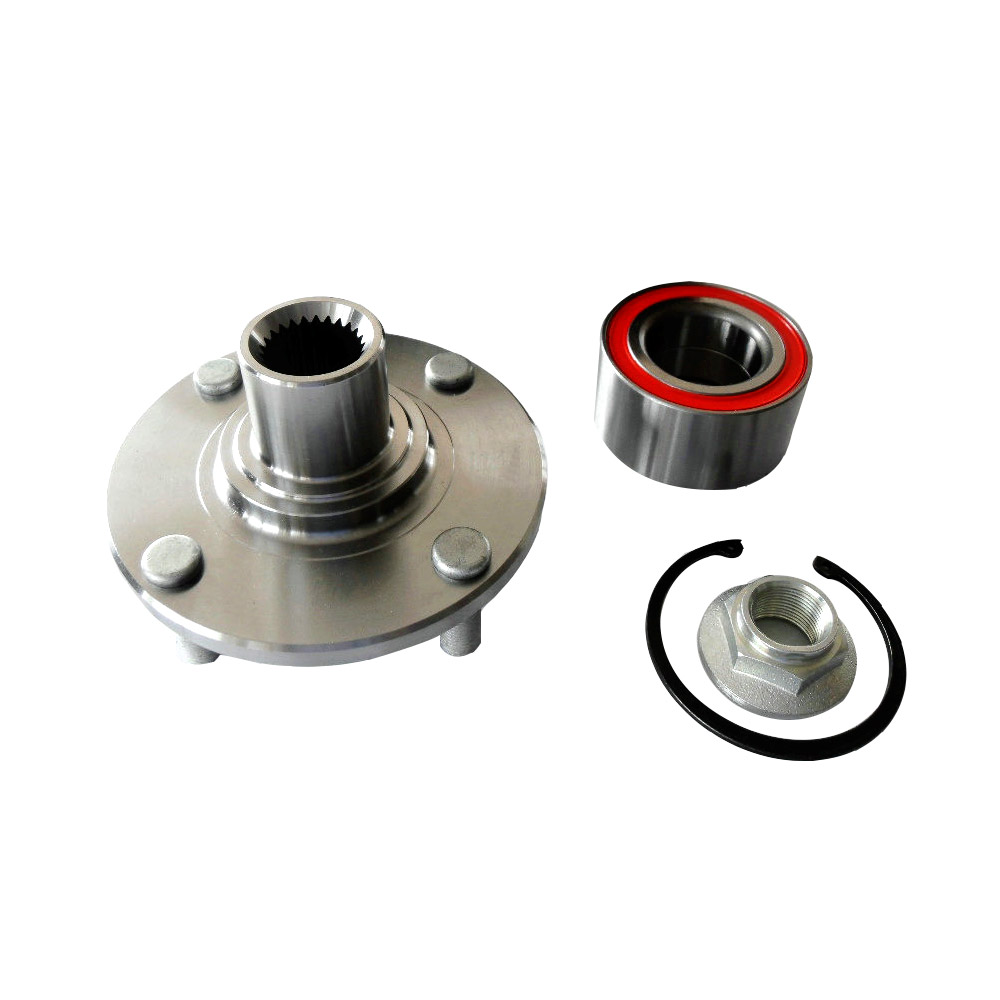 Wheel Hub Spindle Kits for Cars and Light TrucksComplete one-side kit includes wheel flange, bearing, C-clip, axle nut and seals, helping avoid mismatched bearing sourcing during hub repair.View Product →
Why the Hub and Bearing Are Sold Together
The bearing's inner ring is clamped between the hub shoulder and the axle nut. That clamped joint is the load path. Reuse a bearing that has already run against a worn or fretted hub seat and you inherit the wear pattern: the rollers sit slightly off their original position, the clamp load drops, and the assembly starts making noise long before the bearing itself is worn out. That is the practical reason kits exist, and it is why most warranty programs treat a hub-only replacement as an incomplete repair.
The symptoms your customers describe are usually consistent. A hum or growl that rises with road speed and shifts when the steering wheel is loaded left or right; play you can feel rocking the wheel at twelve and six o'clock or three and nine; a traction or ABS lamp that appears after a hub replacement; grease weeping from the seal; a wheel that runs hot after a short drive. We wrote a longer field guide on what happens when a wheel hub bearing is left to fail, which is worth passing along to counter staff who need to explain the upsell.
What Buyers Actually Compare Across Suppliers
Price is the last column in most of the spreadsheets we see, not the first. The comparisons that decide a program are usually about completeness and paperwork, because those are what generate returns and audit questions later.
| What to verify | Why it matters | What a solid answer sounds like |
|---|---|---|
| Kit contents | A hub-only "kit" moves bearing sourcing back to the counter | Hub, matched bearing, axle nut, retaining ring and seal in one box |
| Bearing specification | The bearing decides noise, ABS function and service life | Stated steel grade, controlled grease fill, sealed encoder where required |
| Application data | Wrong fitment is the most expensive kind of return | Year, make and model plus interchange numbers, in a downloadable list |
| ABS compatibility | Encoder type and air gap vary by platform | Kit numbers tied to sensor type rather than a "universal" claim |
| Packaging and labeling | Picking speed and shelf presentation both depend on it | OE-style box design, readable barcodes, private-label option |
| Quality documentation | Claims need to survive a customer audit | Process description aligned to ISO and CE practice, inspection records on request |
| Replenishment | A stockout costs more than a few cents of unit price | US warehouse stock and a stated lead time for non-stock numbers |
The Bearing Inside: Where Quality Really Lives
Buyers rarely see the bearing until something goes wrong, so it is fair to ask what is in it. Three details carry most of the service life: the grade and cleanliness of the bearing steel, the grease fill and its consistency across temperature, and the seal design that keeps water and grit out of the raceway. On ABS applications there is a fourth — the encoder ring has to produce a clean, consistent signal at low speed, which is where inexpensive hubs often fail a road test that a bench check passed.
Our own quality system is built around ISO and CE practice, with inspection at incoming, assembly and final packing stages rather than a single check at the end. That is not a marketing line so much as a description of where defects are cheapest to catch.
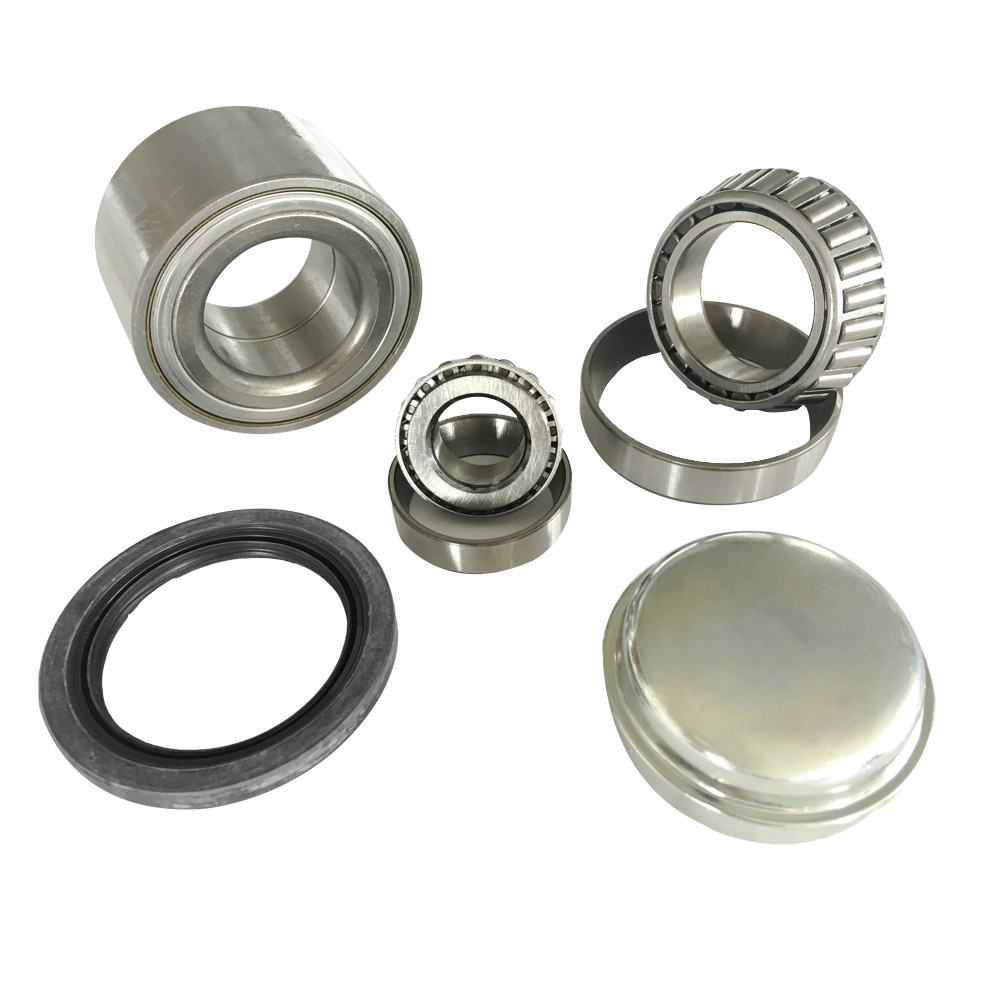 Wheel Hub Bearings for Cars and Light TrucksFirst-generation hub bearing carrying axial and radial loads, offered in ball or roller designs with optional kits and broad aftermarket coverage.View Product →
Coverage, Catalog Depth and Fitment Data
Coverage is the number that gets quoted in meetings, and it deserves context. Our catalog lists more than 1,400 US-market part numbers across wheel hub bearings, spindle kits and hub units, which we describe as coverage for over 96% of the aftermarket vehicle population for cars and light trucks. The useful question is not the headline figure but whether the specific applications your customers bring to the counter are in it — and whether the list is easy to search.
For that reason we publish the spindle kit range as a plain PDF list alongside the printed catalog, so a purchasing team can filter by application or interchange number before sending an enquiry. It is a small thing that saves a lot of email. Related assemblies in the same program — complete hub units, for instance — share fitment logic and packaging, which simplifies shelf layout and staff training.
download the spindle kit application list
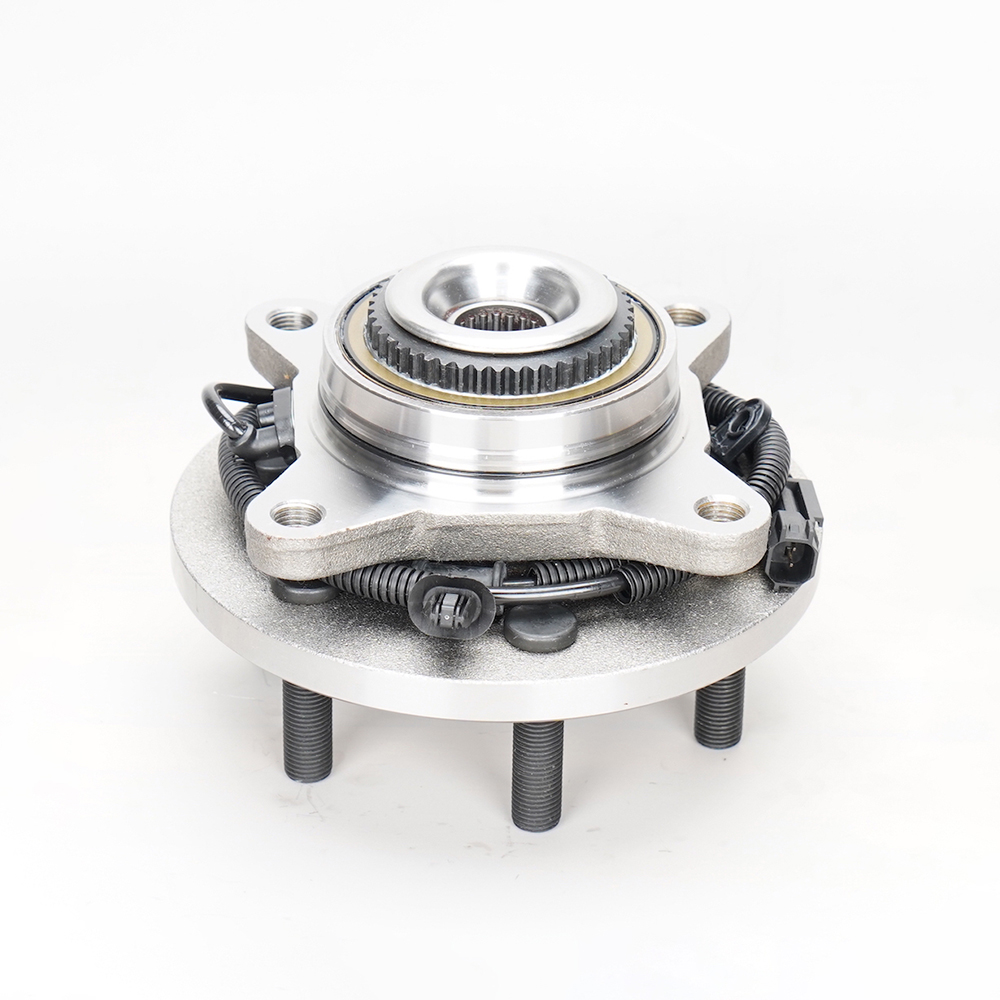 OEM Wheel Bearing Hub Assembly UnitOE-standard hub assembly unit for load carrying and precise hub guidance, offered with broad aftermarket coverage for cars and light trucks.View Product →
Installation Details That Prevent Comebacks
Most premature failures we are asked about turn out to be installation rather than product. The list below is the one we hand to drivetrain shops, and it is worth repeating to anyone buying kits in volume.
- Clean the knuckle bore and remove old thread-locking compound; a burr will tilt the hub in the bore.
- Never press or hammer on the bearing inner ring or the studs — drive the hub by its outer flange only.
- Torque the axle nut to the vehicle specification with the wheel on the ground and the brakes applied, then stake or fit the new locknut.
- Do not reuse a prevailing-torque nut, and do not substitute a standard nut with thread lock.
- Route the ABS harness on its original clips, away from the brake hose and the strut, and check for chafing after a short road test.
- Check runout and confirm the alignment reading before the vehicle leaves, since a bent hub and a bad alignment feel similar to a driver.
Sourcing, Packaging and Delivery from Michigan
We operate as a US-based co-packing and distribution company out of Novi, Michigan, which is the practical reason a distributor can reorder on a short cycle instead of waiting on an ocean container. Being close to the Detroit supply base also means we can respond quickly when a program needs a packaging change or a private-label run, and it keeps freight on domestic terms for the majority of our customers.
Development work is handled the same way. If a customer sends a drawing or a sample of a hub that is not yet in the catalog, our team can quote tooling and production against it, and standard catalog numbers are produced to OE-based dimensions and packed to OE-style design. We export to a number of markets as well, so programs that start in the US can usually be extended.
If you are comparing suppliers and want the specifics for your own application list, the fastest route is a short call on +1-248-864-2068 or a note through the contact form with the part numbers you need priced. Bring your top twenty movers; that conversation is more useful than a full catalog dump.
Questions Worth Asking Before a First Order
- Is the bearing in the kit matched to the hub bore, or sourced separately at packing time?
- Which encoder type does each ABS application use, and how is it identified on the box?
- Can you supply application data as a spreadsheet rather than a printed catalog?
- What is the minimum order for a private-label run, and who owns the artwork?
- How are warranty claims handled — replacement only, or labor contribution?
- What lead time applies to numbers that are not held in the Michigan warehouse?
A spindle kit is a small assembly with a long memory. Get the contents right, match the bearing to the hub, and give the installer clear torque and handling guidance, and the part disappears into a normal repair — which is exactly what a good wheel-end program should do. Get any of those wrong and you will hear about it for a year. We are happy to talk through either case, and to send the application list for the ranges you carry.
